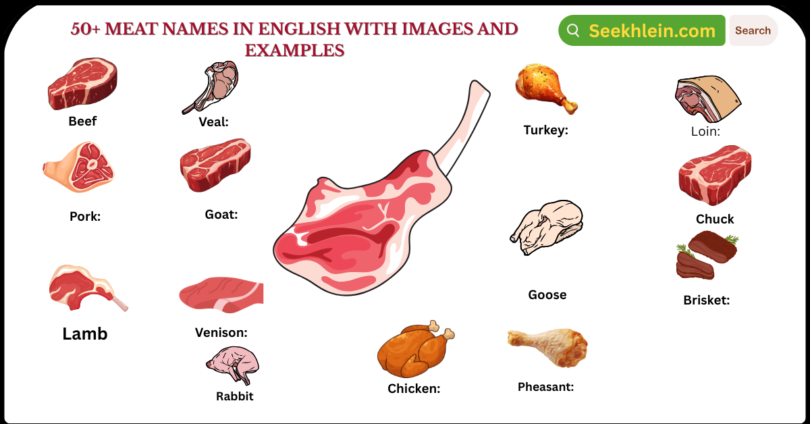

Walk into any butcher shop, supermarket, or restaurant in an English speaking country and you will hear a flood of unfamiliar words: sirloin, brisket, chorizo, giblets, tenderloin. For English learners, home cooks, and even native speakers who never grew up around a kitchen, meat vocabulary can feel like its own language inside the language.
This guide breaks down meat names in English in a simple, organized way. You will learn 50+ Meat Names in English with Images and examples understand how meat gets processed into bacon, sausage, and deli products, and pick up the organ meat words that often confuse learners. By the end, you will be able to read a menu, follow a recipe, or shop for groceries with real confidence.
What Do Meat Names Describe?
Meat names are not all built the same way, and that is exactly why they trip people up.
Some words describe the animal itself, and the meat is simply called by that animal’s name, such as chicken or fish. Other words describe a special meat term tied to a specific animal, such as beef from cattle or pork from pigs. On top of that, there are 50+ Meat Names in English with Images and Examples that describe the part of the animal, like rib, loin, or shank, and there are product names that describe how the meat was prepared, like bacon or sausage.
In short, meat vocabulary in English usually falls into four categories:
Source names, which tell you the animal (beef, pork, lamb, chicken)
Cut names, which tell you the part or shape (chop, fillet, drumstick)
Preparation names, which tell you the process (smoked, cured, minced)
Product names, which tell you the finished item (sausage, pastrami, jerky)
Knowing which category a word belongs to makes it much easier to guess its meaning, even the first time you see it.
Common Source Meat Names
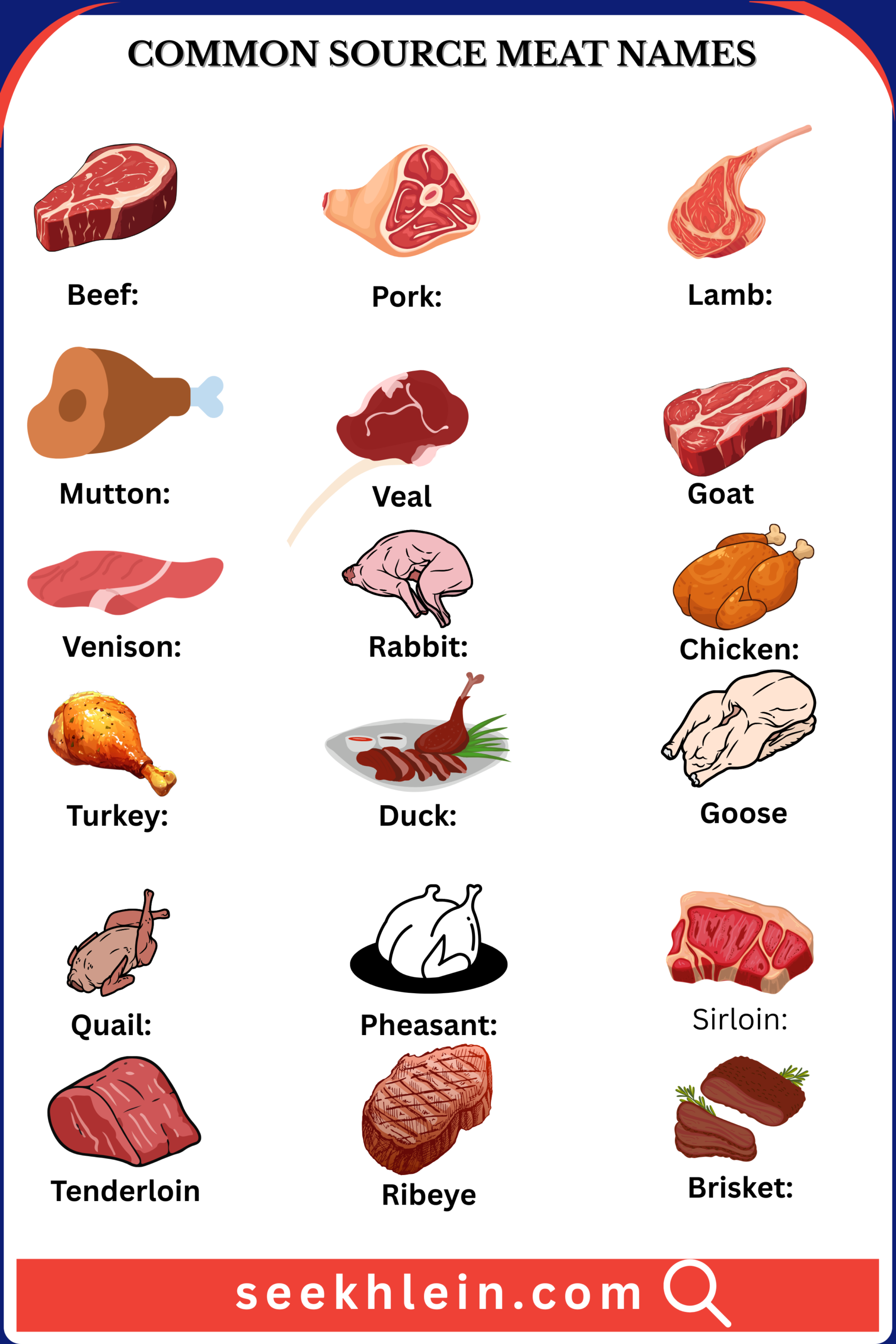
Most everyday meat names in English come from just a handful of farm animals. These are considered red meats, and they form the base of countless recipes around the world.
Beef: meat from cattle, known for a rich, hearty flavor and used in steaks, roasts, and ground beef
Pork: meat from pigs, prized for its versatility, from bacon to chops to roasts
Lamb: meat from a young sheep, mild and tender
Mutton: meat from a mature sheep, with a stronger, gamier flavor than lamb
Veal: meat from a young calf, pale, delicate, and often used in fine dining
Goat: lean, slightly earthy meat common in South Asian, African, and Caribbean cooking, sometimes labeled chevon
Venison: meat from deer, lean and often used in stews or steaks
Rabbit: mild, lean meat used across many European cuisines
Notice the pattern with cattle and sheep. English speakers rarely say cow meat or sheep meat. Instead, they use a separate word entirely, which is one of the trickiest parts of learning meat vocabulary.
Poultry Meat Names
Poultry refers to birds raised specifically for food. Unlike beef or pork, poultry names usually match the name of the bird itself, which makes this category a little easier to learn.
Chicken: the most widely eaten poultry meat in the world
Turkey: larger than chicken, traditionally served during holiday meals
Duck: rich, fatty meat with a deeper flavor than chicken
Goose: a robust, festive meat often reserved for special occasions
Quail: a small game bird with tender, delicate meat
Pheasant: another game bird, often featured in gourmet dishes
Poultry sits in its own category because it is generally considered white meat, while beef, pork, and lamb fall under red meat. This distinction matters for both cooking methods and nutrition labels, so it is worth remembering.
Common Meat Cuts and Portions
Once you know the source meat, the next step is understanding the cut. A cut tells you exactly which part of the animal you are buying or ordering, and it strongly affects texture, cooking time, and price.
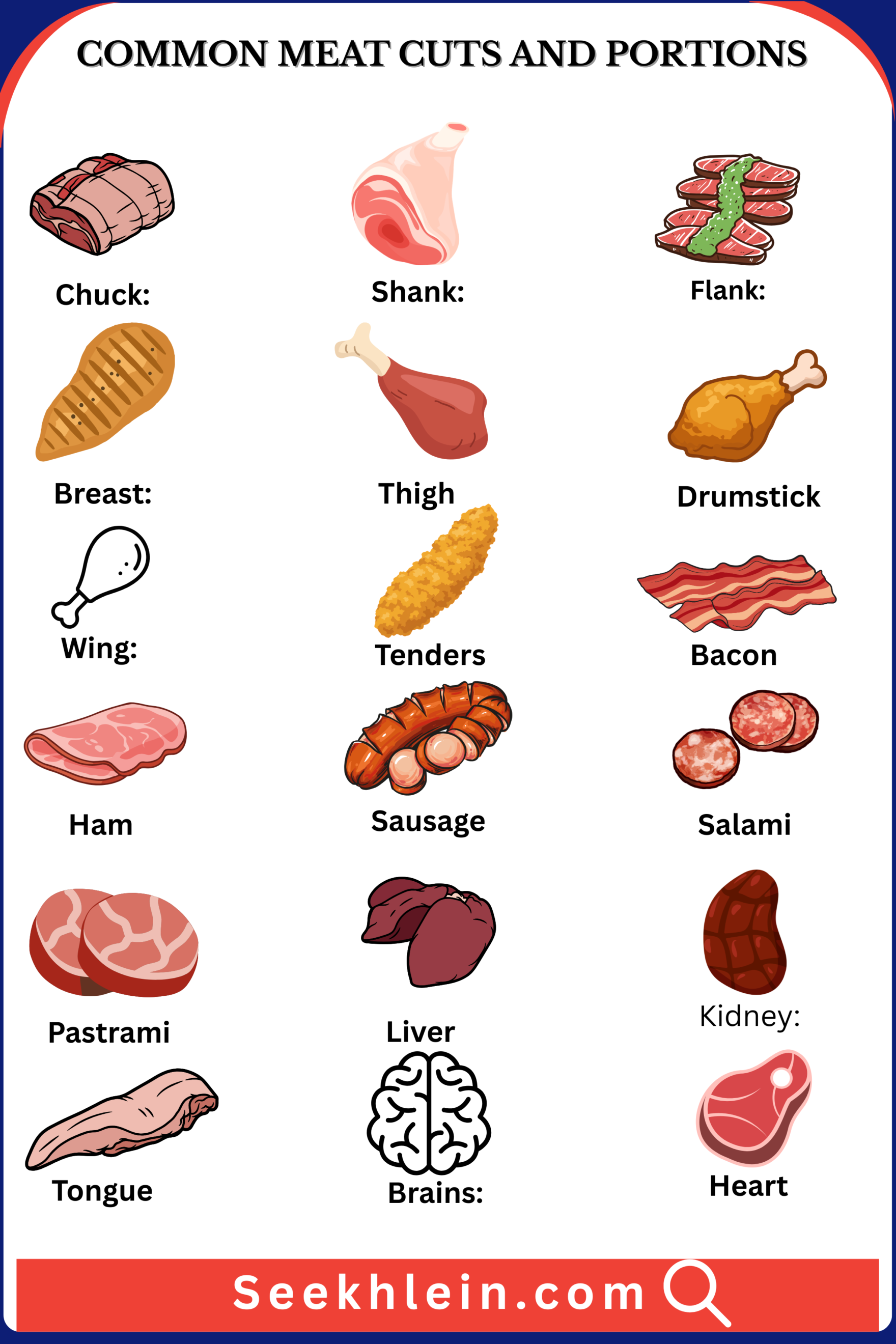
Some of the most common meat cuts you will see on menus and packaging include:
Sirloin: cut from the back of the animal, often grilled or broiled
Tenderloin: an especially tender cut, ideal for steaks and roasts
Ribeye: a well marbled cut taken from the rib section
Brisket: a cut from the lower chest, known for rich flavor when slow cooked
Chuck: a cut from the shoulder area, often used for stews and pot roasts
Shank: the leg portion, tough but flavorful, usually braised
Loin: a lean section along the back, used for chops and roasts
Flank: a lean, long cut from the belly area, often sliced thin
Marbling is a term worth knowing here too. It refers to the streaks of fat running through the meat, and higher marbling generally means a juicier, more flavorful cut once cooked.
Ground, Cubed, Sliced, and Shredded Meat
Beyond named cuts, English also uses simple descriptive words for how meat has been physically prepared before cooking. These terms apply across almost every type of meat and appear constantly in recipes.
Ground meat: meat that has been finely chopped or minced, often called mince in British English, used in burgers, meatballs, and sauces
Cubed meat: meat cut into small, even chunks, ideal for stews and kebabs
Sliced meat: meat cut into thin flat pieces, common in sandwiches and stir fries
Shredded meat: meat pulled apart into thin strands, often after slow cooking, used in tacos and sandwiches
Diced meat: similar to cubed but usually smaller pieces, used in soups and casseroles
These preparation words are especially useful because they apply to beef, pork, chicken, and even fish, so learning them once saves a lot of time later.
Poultry Cut Names
Poultry has its own set of cut names, separate from the beef and pork vocabulary above. Because birds have a different body structure, the terms focus on wings, legs, and breast sections rather than ribs or loins.
Breast: the lean meat from the front of the bird, popular for its low fat content
Thigh: dark meat from the upper leg, juicier than breast meat
Drumstick: the lower leg portion, a classic favorite at cookouts
Wing: small, often crispy when fried or roasted, popular as an appetizer
Tenders: strips of meat taken from the breast, tender and quick to cook
Whole birds are also sold in specific forms, such as a whole chicken, a spatchcocked chicken (flattened for even cooking), or a boneless, skinless breast, which has become one of the most common poultry purchases in modern grocery stores.
Processed Meat Names
Processed meats are products that have been cured, smoked, salted, or otherwise transformed from raw meat into something new. This is one of the richest areas of meat vocabulary, and it deserves a closer look at each major category.
Bacon and Ham
Bacon comes from the back and sides of a pig, and it is typically salted, cured, and smoked before being sliced thin and fried or baked. Ham comes from the hind leg of the pig and is also cured, though it is usually sold in thicker slices or whole roasts rather than the crispy strips associated with bacon.
Both words are technically pork products, but they are almost never referred to as pork in casual conversation. Instead, English speakers simply say bacon or ham.
Sausage and Hot Dogs
Sausage refers to ground meat, typically pork, beef, or a blend, mixed with fat, seasoning, and sometimes grains, then stuffed into a casing. Sausages vary enormously by region, from breakfast sausage links to spicy Italian sausage used in pasta dishes.
Hot dogs are a specific type of sausage, usually made from a smooth, finely ground meat blend, sold in a long thin shape and traditionally served in a bun. In many parts of the world, hot dogs are also called frankfurters or wieners.
Salami, Pepperoni, and Pastrami
These three words look similar but describe different products.
Salami is a cured sausage, often air dried, made from fermented and seasoned meat, commonly sliced thin for sandwiches or charcuterie boards. Pepperoni is a spicier, softer variety of salami, most famous as a pizza topping in American cuisine. Pastrami is different altogether. It is usually made from beef, typically the brisket, which is brined, seasoned with a heavy spice rub, smoked, and then steamed, resulting in a deeply flavored, tender deli meat.
Corned Beef, Jerky, and Deli Meat
Corned beef is beef, again often brisket, cured in a salty brine, giving it a distinctive pink color and salty flavor. It is a staple of Irish American cuisine, especially around St. Patrick’s Day.
Jerky is meat, most commonly beef, that has been trimmed of fat, sliced into strips, and dried, sometimes with added seasoning or smoke. Its low moisture content makes it a popular, shelf stable snack.
Deli meat is a broad umbrella term covering any meat sliced thin for sandwiches, including ham, turkey breast, roast beef, salami, and pastrami. When someone says they bought deli meat, they are talking about a general category rather than one specific product.
Organ Meat Names
Organ meats, also called offal, come from the internal parts of an animal rather than the muscle tissue. These cuts appear less often in casual conversation, but they show up regularly in traditional recipes and international cuisine.
Liver: rich in iron, used in pâté, stews, and fried dishes
Kidney: often included in traditional pies and stews
Heart: dense and flavorful, popular grilled in several cuisines
Tongue: slow cooked until tender, used in sandwiches and tacos
Tripe: the lining of an animal’s stomach, used in soups worldwide
Brains: used in some regional dishes, though less common today
Trotters or feet: the lower legs, often braised or used in broths
Giblets: the edible internal organs of poultry, typically the heart, liver, and gizzard, often used to make gravy
Organ meats were historically eaten out of necessity, since every part of the animal was used, but they have seen a comeback in modern cooking thanks to their nutritional density and unique flavors.
Meat Terms That Commonly Cause Confusion
A few meat words consistently trip up English learners because they do not follow an obvious pattern.
Beef and steak are not interchangeable. Beef names the meat itself, while steak refers to a specific cut, usually thick and prepared for grilling or pan searing. The same goes for pork and chop, or chicken and breast.
Mutton and lamb both come from sheep, but the animal’s age changes the word entirely. Lamb is younger and milder, mutton is older and stronger tasting.
Ground meat and mince mean the same thing, but ground meat is more common in American English while mince is standard in British English.
Chicken can refer to both the living bird and the meat on your plate, which is unusual compared to beef or pork, where the animal name (cow, pig) and the meat name are completely different words.
Finally, seafood is sometimes grouped with meat and sometimes treated as its own category, depending on dietary or cultural context, so it is worth clarifying which definition applies in a given conversation.
Meat Names in Example Sentences
Seeing these words used naturally makes them far easier to remember than studying a list alone.
- The butcher trimmed the fat off the sirloin before wrapping it for the customer.
- She slow cooked the beef brisket for eight hours until it fell apart.
- We grilled chicken thighs instead of breasts because they stay juicier.
- He ordered a pastrami sandwich on rye with mustard.
- The recipe calls for one pound of ground pork and a handful of fresh herbs.
- My grandmother always added chicken giblets to her homemade gravy.
- The deli counter sells sliced turkey, ham, and salami by the pound.
- Venison stew is a popular dish in the autumn hunting season.
- The chef seared the duck breast skin side down for extra crispiness.
- Jerky makes a convenient, protein packed snack for long hikes.
Conclusion
Meat vocabulary in English is really made up of four simple building blocks: the source animal, the specific cut, the preparation method, and the finished product. Once you separate these categories in your mind, words like brisket, pastrami, giblets, and drumstick stop feeling random and start making sense as part of a logical system.
Whether you are learning English as a second language, sharpening your cooking skills, or simply trying to order confidently at a restaurant, understanding these terms will make grocery shopping, recipe reading, and everyday conversation noticeably easier.
Frequently Asked Questions
What is the difference between a meat name and a meat cut?
A meat name tells you the animal source, such as beef or pork, while a meat cut tells you the specific part or portion, such as sirloin or brisket.
Why do beef and pork not share their name with the animal?
English borrowed many meat terms from Old French, which is why cattle becomes beef and pigs become pork instead of using the animal’s own name.
Is chicken considered red meat or white meat?
Chicken is classified as white meat, along with turkey, while beef, pork, and lamb are classified as red meat.
What is the difference between lamb and mutton?
Lamb comes from a young sheep and has a milder flavor, while mutton comes from a mature sheep and tastes noticeably stronger.
What does the word offal mean?
Offal refers to organ meats, such as liver, kidney, heart, and tripe, which come from the internal parts of an animal rather than its muscle.
Is ground meat the same as mince?
Yes, ground meat and mince describe the same finely chopped product, with ground meat used mainly in American English and mince used in British English.
Read More;






[…] 50+ Meat Names in English with Images and Examples […]