
Flowers have always been more than decoration. Long before greeting cards existed, people used blooms to say things words couldn’t quite capture — love, grief, gratitude, apology, hope. This tradition, often called floriography, or the “language of flowers,” dates back centuries and still shapes the way we choose bouquets today.
Whether you’re planning a garden, picking a wedding theme, or simply want to know what to send someone on a special occasion, understanding the different types of flowers and their hidden meanings makes the choice far more personal. In this guide, we’ll walk through Flower Names in English: 150+ Types with Photos you will amaze , so you can pick blooms that say exactly what you mean.
What Are Flowers?
Flowers are the reproductive parts of flowering plants (angiosperms). They produce seeds that help plants reproduce and continue their life cycle. Besides their biological importance, flowers are widely used for decoration, gifts, perfumes, medicines, food, and religious ceremonies. Their beauty and fragrance make them one of the most admired parts of nature.
Importance of Flowers
Flowers play a vital role in both nature and human life. They help plants reproduce through pollination, provide nectar and pollen for insects and birds, and contribute to biodiversity. People also use flowers for decoration, celebrations, perfumes, herbal medicines, cosmetics, and even cooking. Many flowers symbolize love, friendship, peace, and remembrance in different cultures.
Why Flower Meanings Matter
Every flower carries a story rooted in mythology, history, or cultural tradition. A red rose whispers passion, while a white lily speaks of purity and remembrance. Even the color of the same flower can completely change its message — a yellow rose means friendship, but a red one means romantic love.
Knowing these meanings helps you:
- Choose the right flower for weddings, funerals, birthdays, or apologies
- Design a garden with symbolic value, not just visual appeal
- Avoid sending the wrong emotional message (some flowers signal jealousy or rejection)
- Add depth and intention to floral gifts.
Parts of a Flower
- Petals
- Sepals
- Stamen
- Pistil (Carpel)
- Ovary
Popular Garden Flowers and Their Meanings
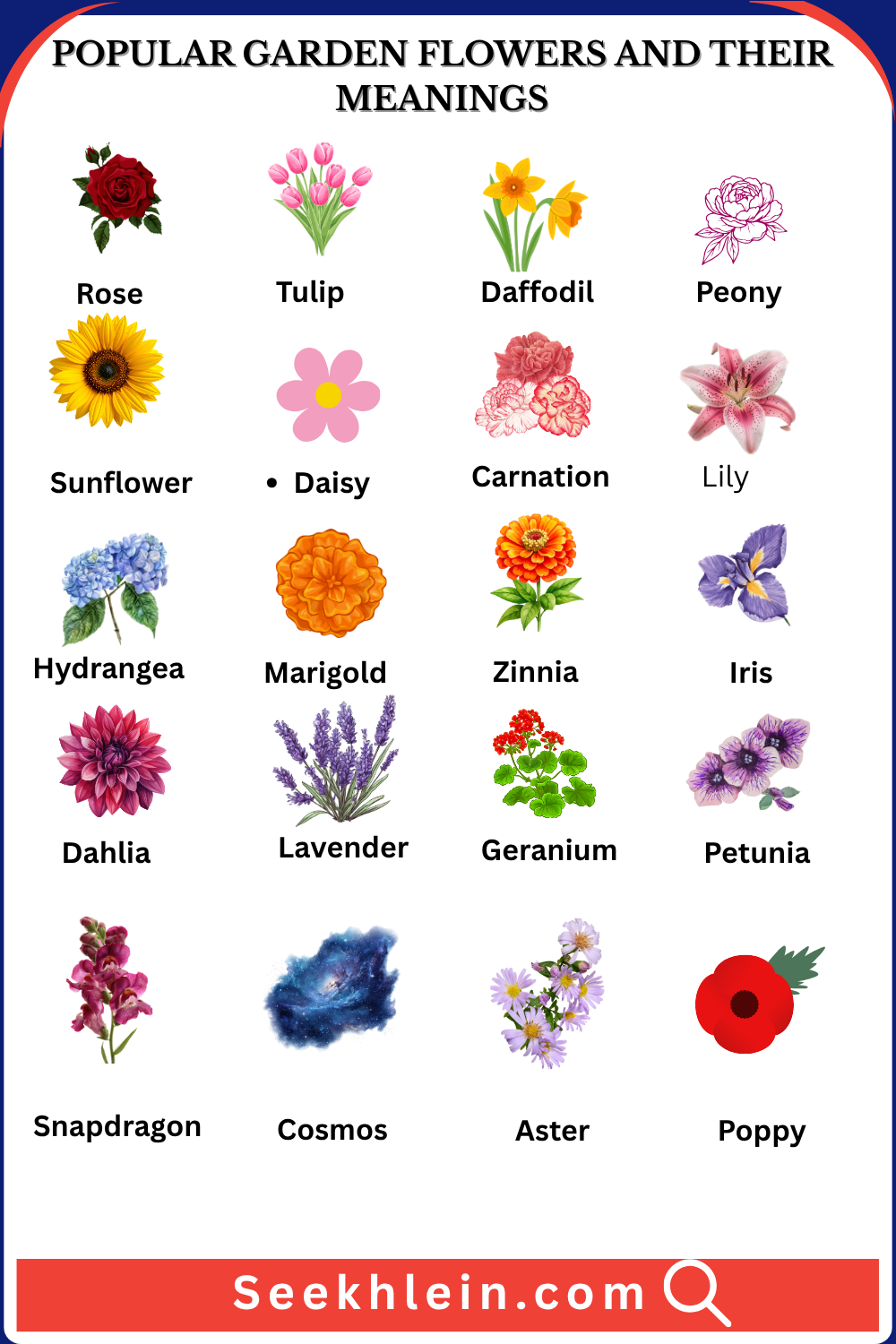
These are the flowers most people recognize instantly, and they remain best-sellers at florists worldwide.
- Rose – Love, passion, and beauty (color changes the exact meaning)
- Tulip – Perfect love and rebirth
- Daffodil – New beginnings and unrequited love
- Peony – Honor, wealth, and romance
- Sunflower – Adoration, loyalty, and positivity
- Daisy – Innocence and purity
- Carnation – Fascination and distinction
- Lily – Purity, refined beauty, and remembrance
- Hydrangea – Gratitude and heartfelt emotion
- Marigold – Warmth and creativity
- Zinnia – Lasting affection
- Chrysanthemum – Loyalty and joy (or grief, in some cultures)
- Iris – Wisdom and hope
- Dahlia – Elegance and inner strength
- Lavender – Devotion and serenity
- Geranium – Comfort and gentility
- Petunia – Anger, but also soothing calm depending on context
- Snapdragon – Grace under pressure
- Cosmos – Order and harmony
- Aster – Patience and daintiness
Wildflowers and Meadow Blooms
Wildflowers thrive without cultivation and often symbolize resilience and freedom.
- Poppy – Remembrance and eternal sleep
- Buttercup – Childishness and cheerfulness
- Queen Anne’s Lace – Sanctuary and fantasy
- Cornflower – Hope and delicacy
- Forget-Me-Not – True and lasting love
- Wild Rose – Simplicity
- Clover – Good luck
- Foxglove – Insincerity, despite its beauty
- Black-Eyed Susan – Encouragement and motivation
- Coneflower (Echinacea) – Strength and healing
Tropical Flowers and Exotic Blooms
Tropical flowers are prized for bold colors and dramatic shapes, thriving in warm climates.
- Hibiscus – Delicate beauty and rare loveliness
- Bird of Paradise – Joy, freedom, and paradise
- Orchid – Luxury, strength, and refined beauty
- Plumeria – Positivity and new beginnings
- Heliconia – Adventure
- Anthurium – Hospitality
- Protea – Diversity and courage
- Passionflower – Faith and spirituality
- Ginger Flower – Strength and prosperity
- Bougainvillea – Passion and unity
Flowers That Grow From Bulbs
- Hyacinth – Sincerity and sport (color-dependent meaning)
- Crocus – Cheerfulness
- Amaryllis – Determination and pride
- Freesia – Friendship and trust
- Allium – Unity and patience
- Snowdrop – Hope and consolation
- Gladiolus – Strength of character
- Ranunculus – Radiant charm
- Anemone – Anticipation
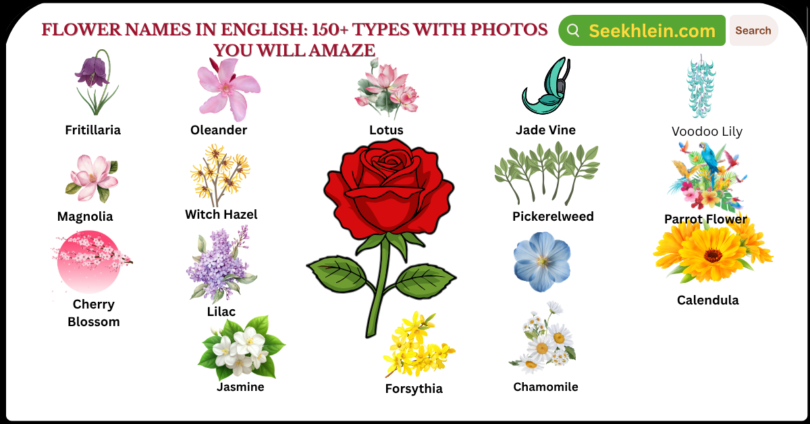
- Fritillaria – Persecution, oddly enough, in Victorian symbolism
Flowering Trees and Shrubs
- Magnolia – Nobility and dignity
- Cherry Blossom – The fleeting nature of life
- Camellia – Admiration and perfection
- Azalea – Temperance and passion
- Lilac – First love
- Jasmine – Sensuality and grace
- Oleander – Caution (its beauty hides toxicity)
- Witch Hazel – A spell, magic, or protection
- Forsythia – Anticipation
- Rhododendron – Danger and caution
Water and Pond Flowers
- Lotus – Enlightenment and rebirth
- Water Lily – Purity of heart
- Water Hyacinth – Beauty with a warning of overgrowth
- Marsh Marigold – Desire for riches
- Pickerelweed – Adaptability
Rare and Unique Flower Types
Some flowers stand out for their strange forms or scarcity rather than everyday familiarity.
- Ghost Orchid – Rarity and mystery
- Chocolate Cosmos – Deep, quiet love
- Black Bat Flower – Mystery and the unknown
- Corpse Flower – Rarity, despite its notorious odor
- Jade Vine – Rare beauty
- Blue Poppy – The unattainable
- Globe Thistle – Independence
- Bleeding Heart – Compassion and unconditional love
- Voodoo Lily – Transformation
- Parrot Flower – Playfulness
Herb and Edible Flowers
- Chamomile – Patience and relaxation
- Lavender Flower – Calm and devotion
- Calendula – Grief and remembrance
- Borage – Courage
- Nasturtium – Patriotism and conquest
- Chive Blossom – Usefulness
- Rosemary Flower – Remembrance
- Violet – Modesty and faithfulness
- Pansy – Thoughtfulness
- Sweet Pea – Blissful pleasure
Fall and Winter Blooming Flowers
- Aster (Autumn) – Wisdom and valor
- Chrysanthemum (Fall) – Longevity
- Sedum – Tranquility
- Witch Hazel (Winter) – Comfort in hardship
- Camellia (Winter) – Longing
- Hellebore – Serenity
- Winter Jasmine – Grace under adversity
- Snowdrop (Winter) – Rebirth after hardship
- Pansy (Cool Season) – Remembrance
- Cyclamen – Resignation and goodbye
Flowers by Color Meaning
Color often changes a flower’s message more than the species itself:
- Red flowers generally represent love, passion, and respect
- White flowers symbolize purity, innocence, and sympathy
- Yellow flowers signify friendship, joy, and sometimes jealousy
- Pink flowers express admiration, gentleness, and gratitude
- Purple flowers convey royalty, enchantment, and dignity
- Orange flowers stand for enthusiasm and energy
- Blue flowers represent calm, trust, and rarity
How to Choose the Right Flower for the Occasion
Picking a flower isn’t only about appearance — the meaning behind it matters just as much. Here’s a quick way to match flowers with common occasions:
- Weddings – Roses, peonies, and ranunculus for romance and elegance
- Sympathy – Lilies, chrysanthemums, and white roses for peace and remembrance
- Birthdays – Sunflowers or gerberas for cheerfulness
- Apologies – Purple hyacinths or white tulips for sincerity
- Anniversaries – Red roses or orchids for enduring love
- New Beginnings – Daffodils or lotus flowers for fresh starts
How to Identify Different Flowers
You can identify flowers by observing several characteristics, including:
- Flower color and pattern
- Number and shape of petals
- Size and structure of the bloom
- Leaf shape and arrangement
- Stem type and plant height
- Fragrance
- Blooming season
- Natural habitat and growing conditions
These features make it easier to distinguish one flower from another.
Tips for Growing a Meaningful Flower Garden
If you’re designing a garden rather than sending a bouquet, then this guide that includes Flower Names in English: 150+ Types with Photos you will amaze can help you too;
- Group flowers by blooming season so color and meaning shift naturally throughout the year
- Mix bulbs, shrubs, and wildflowers for texture and continuous blooms
- Place fragrant flowers like jasmine or lavender near seating areas
- Choose pollinator-friendly blooms such as coneflowers and asters to support bees and butterflies
- Consider soil type and sunlight before selecting delicate tropical varieties
Conclusion
From the timeless rose to the rare ghost orchid, every flower on this list carries its own story, symbolism, and charm. Whether you’re building a garden, planning a wedding, or choosing a heartfelt gift, knowing what each bloom represents adds a layer of meaning that goes far beyond its color and shape. The next time you pick up a bouquet or plant a new bed of flowers, you’ll know exactly what message you’re sending.
Frequently Asked Questions
What flower symbolizes new beginnings?
The daffodil is widely recognized as the flower of new beginnings and rebirth, especially since it blooms early in spring.
Which flower means unconditional love?
The bleeding heart flower symbolizes compassion and unconditional love because of its heart-shaped, drooping blooms.
What is the rarest flower in the world?
The ghost orchid and the corpse flower are among the rarest and most sought-after blooms due to their unusual growing conditions.
What flower represents friendship?
Yellow roses and freesias are the most common flowers associated with friendship and trust.
Do flower colors really change their meaning?
Yes, the same flower species can carry very different meanings depending on its color, such as red versus yellow roses.
What flowers are best for a sympathy arrangement?
White lilies, chrysanthemums, and white roses are traditional choices for sympathy because they symbolize peace and remembrance.
Which flower means good luck?
Clover, particularly the four-leaf variety, is the most well-known symbol of good luck.
What flower represents eternal love?
The red tulip and the amaryllis are both associated with lasting, unwavering love.
Read More: