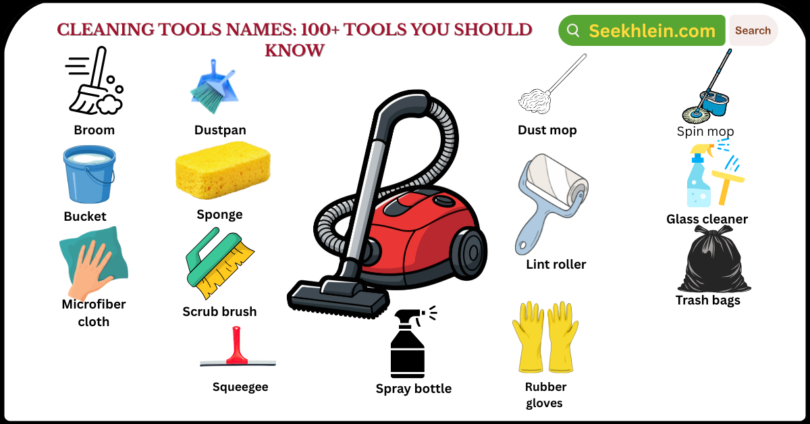

Keeping a home, office, or commercial space spotless starts with knowing what tools actually belong in your cleaning kit. Whether you’re a homeowner building a supply closet from scratch, a student learning household vocabulary, or someone training new cleaning staff, having a clear picture of every tool and its purpose makes the job faster and far less confusing. This guide walks you through more than 100 cleaning tools and supplies, organized by where and how they’re used, so you can quickly find the right item for the right task from everyday sweeping to deep bathroom and kitchen cleaning.
Below, you’ll find a complete Cleaning Tools Names: 100+ Tools You Should Know , floor-specific tools, bathroom essentials, kitchen must-haves, and general supplies that belong in almost every cleaning caddy. Each entry includes a short, plain-language explanation so you know exactly what it does and why it matters.
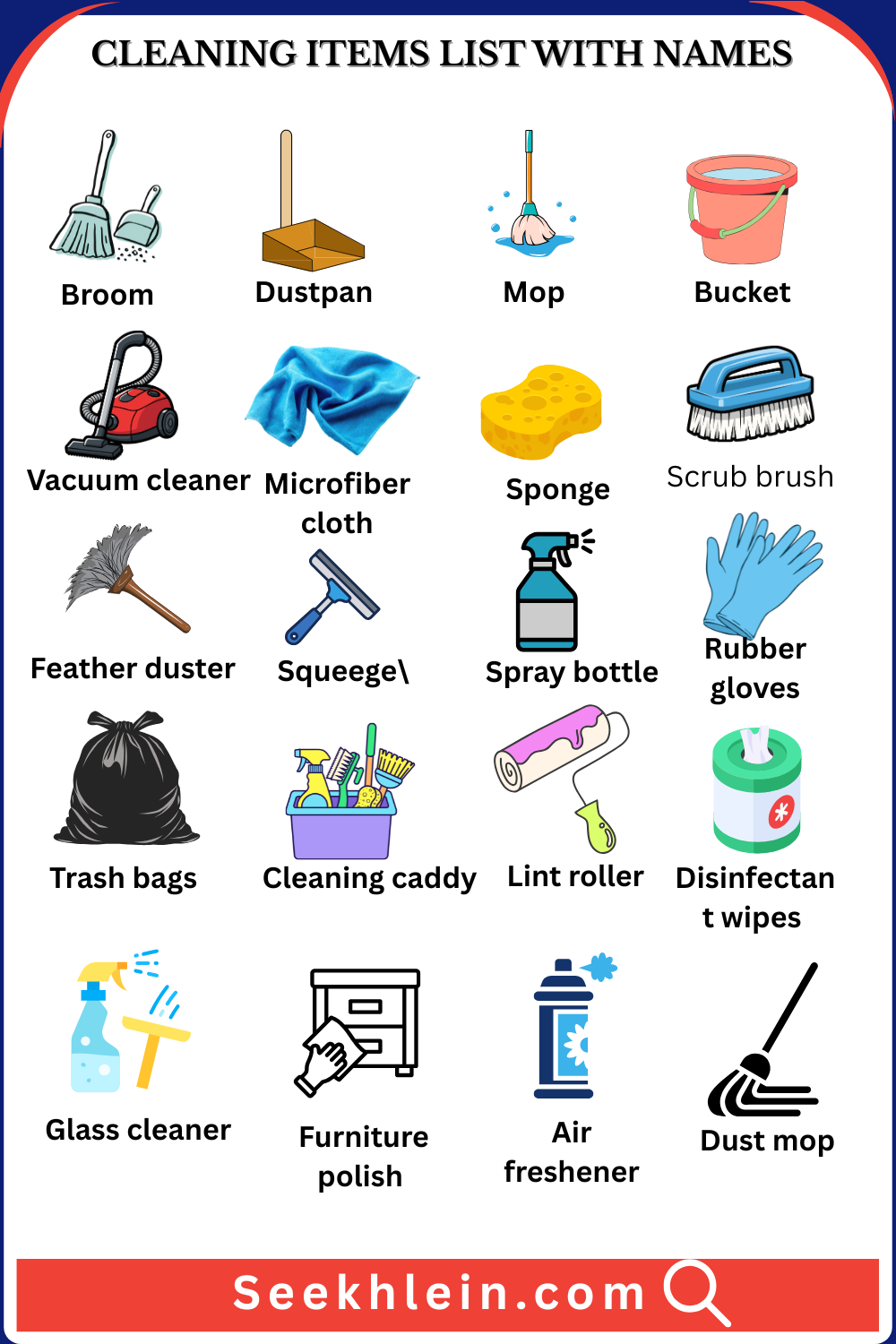
Cleaning Items List with Names
Every cleaning routine, big or small, relies on a core set of tools. Below is a general cleaning items list with names that covers the basics found in almost every household or commercial cleaning kit.
- Broom A long-handled tool with stiff bristles used to sweep dirt, dust, and debris off floors before mopping.
- DustpanA flat, handled pan that collects swept-up dirt so it can be thrown away without bending down.
- Mop A floor-washing tool with an absorbent or microfiber head used with water and cleaning solution.
- Bucket A handled container used to carry and mix water, detergent, or disinfectant during cleaning.
- Vacuum cleaner An electric appliance that sucks up dust, dirt, and small debris from carpets, rugs, and hard floors.
- Microfiber cloth A soft, lint-free cloth that traps dust and grime effectively without scratching surfaces.
- Sponge A soft, absorbent tool used for wiping and light scrubbing on dishes, counters, and other surfaces.
- Scrub brush A stiff-bristled brush designed for removing tough stains from hard surfaces.
- Feather duster A soft, feathery tool used to dust shelves, blinds, and decorative items without scattering debris.
- Squeegee A rubber-bladed tool that pulls water and residue off glass, mirrors, and smooth surfaces.
- Spray bottle A refillable container that dispenses cleaning solution in a fine mist for spot cleaning.
- Rubber gloves Protective handwear that shields skin from chemicals, hot water, and germs while cleaning.
- Trash bags Disposable bags used to line bins and carry waste out of the home or workspace.
- Cleaning caddy A portable carrier that organizes and transports sprays, cloths, and brushes between rooms.
- Lint roller A sticky roller used to remove pet hair, lint, and dust from fabric and upholstery.
- Disinfectant wipes Pre-moistened wipes used to quickly sanitize handles, counters, and other high-touch surfaces.
- All-purpose cleaner A multi-surface cleaning solution suitable for counters, appliances, and general wipe-downs.
- Glass cleaner A specially formulated spray designed to leave windows and mirrors streak-free.
- Furniture polish A cleaning product that removes dust and adds shine to wood surfaces and furniture.
- Air freshener A product that neutralizes odors and adds a pleasant scent to a room after cleaning.
This foundational list forms the backbone of most cleaning supplies checklists, and nearly every specialized tool below builds on these basics.
Floor Cleaning Tools With Names and Pictures
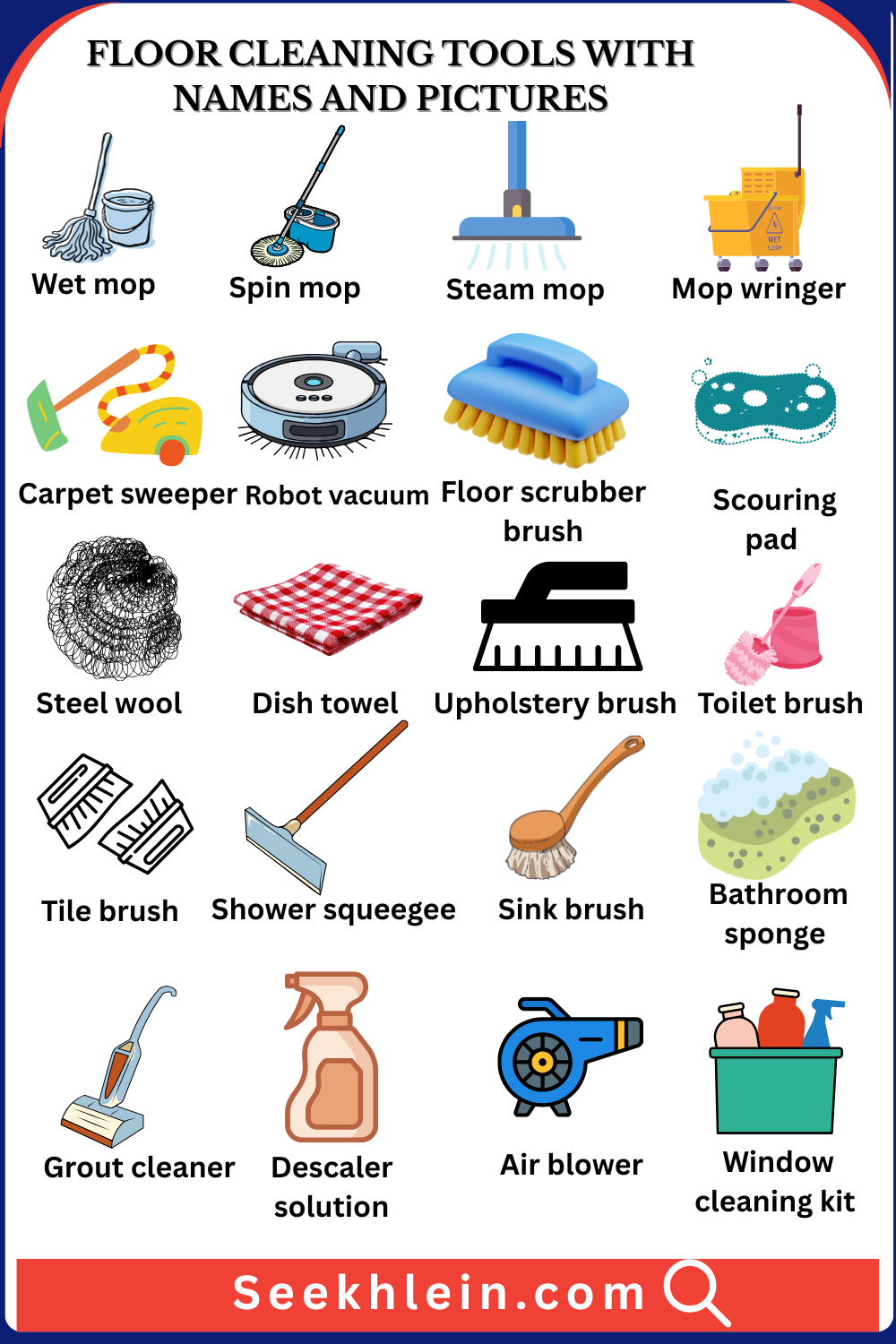
Floors take the most daily wear, so they need dedicated tools beyond a basic broom and mop. Here are the essential floor cleaning tools with names you’ll want in your kit:
- Dust mop – A flat mop with a fluffy or microfiber head designed to trap fine dust and hair on hard flooring.
- Wet mop – A heavier mop used with water and cleaner to wash away stains and sticky spills.
- Spin mop – A rotating mop paired with a spinning bucket that wrings out excess water quickly and mess-free.
- Steam mop – An electric mop that uses hot steam to sanitize and loosen grime without harsh chemicals.
- Mop wringer – A bucket attachment that squeezes water out of a mop head for a controlled, damp clean.
- Carpet sweeper – A manual, battery-free tool that rolls over carpets to pick up crumbs and light dirt.
- Robot vacuum – An automated vacuuming device that cleans floors on a schedule with minimal manual effort.
- Floor scrubber brush – A stiff, long-handled brush used to scrub grout lines and heavily soiled tile floors.
- Floor squeegee – A wide rubber tool used to push water toward a drain after mopping large areas.
- Broom and dustpan set – A matched pair typically stored together for quick daily sweeping tasks.
- Rubber floor mat scraper – A textured mat placed at entryways to trap dirt from shoes before it spreads indoors.
Together, these floor cleaning tools names and functions make it easy to match the right tool to tile, hardwood, carpet, or laminate flooring without causing damage.
List of Cleaning Supplies and Tools
Beyond the basics, most cleaning routines call for extra supplies that handle specific messes or protect surfaces. This Cleaning Tools Names: 100+ Tools You Should Know list commonly found in supply closets and janitorial carts:
- Scouring pad – An abrasive pad used to cut through burnt food and grease on cookware.
- Steel wool – Fine metal fibers bundled into a pad for heavy-duty scrubbing and rust removal.
- Paper towels – Disposable absorbent sheets ideal for quick spills and sanitizing wipe-downs.
- Dish towel – A reusable cloth used to dry dishes or wipe kitchen counters.
- Duster with extendable handle – A long-reach duster designed for ceiling fans, vents, and high shelves.
- Cleaning trolley – A wheeled cart that carries multiple supplies for professional or large-scale cleaning jobs.
- Pipe cleaner brush – A thin, flexible brush used to clean narrow pipes, straws, or tight gaps.
- Grout brush – A small, stiff brush shaped to scrub grime out of narrow tile grout lines.
- Window cleaning kit – A combination tool with a squeegee and scrubber pad for streak-free glass cleaning.
- Blind cleaner tool – A multi-pronged tool designed to wipe several window blind slats at once.
- Upholstery brush – A soft-bristled attachment or handheld brush used to clean fabric furniture.
- Drain cleaning tool – A flexible plastic or wire tool used to clear hair and debris from clogged drains.
- Cleaning ladder or step stool – A stable platform used to safely reach high walls, windows, or shelves.
- Odor eliminator spray – A specialized spray formulated to break down odor molecules rather than just mask them.
- Disinfectant spray – A germ-killing spray used on surfaces prone to bacteria buildup.
- Multi-surface wipes – Pre-moistened cleaning wipes suitable for countertops, appliances, and fixtures.
- Trash can liners – Bags sized specifically to fit different bin sizes for tidy waste disposal.
- Cleaning apron – Protective wear that keeps clothing dry and clean during heavy-duty scrubbing.
- Furniture duster mitt – A glove-style duster that lets you wipe surfaces with your hand for better control.
- Air blower or duster spray – A canned air or handheld blower used to clean keyboards, vents, and electronics.
This list of cleaning supplies and tools is especially useful for anyone stocking a cleaning business cart or setting up a well-equipped home utility closet.
Cleaning Tools and Supplies Names with Pictures
Different rooms demand different tools. Below, the cleaning tools and supplies names are broken down by the two areas that need the most specialized equipment: the bathroom and the kitchen.
Bathroom Cleaning Supplies and Tools
Bathrooms deal with moisture, soap scum, and bacteria, so they need tools built to handle grime in tight, damp spaces.
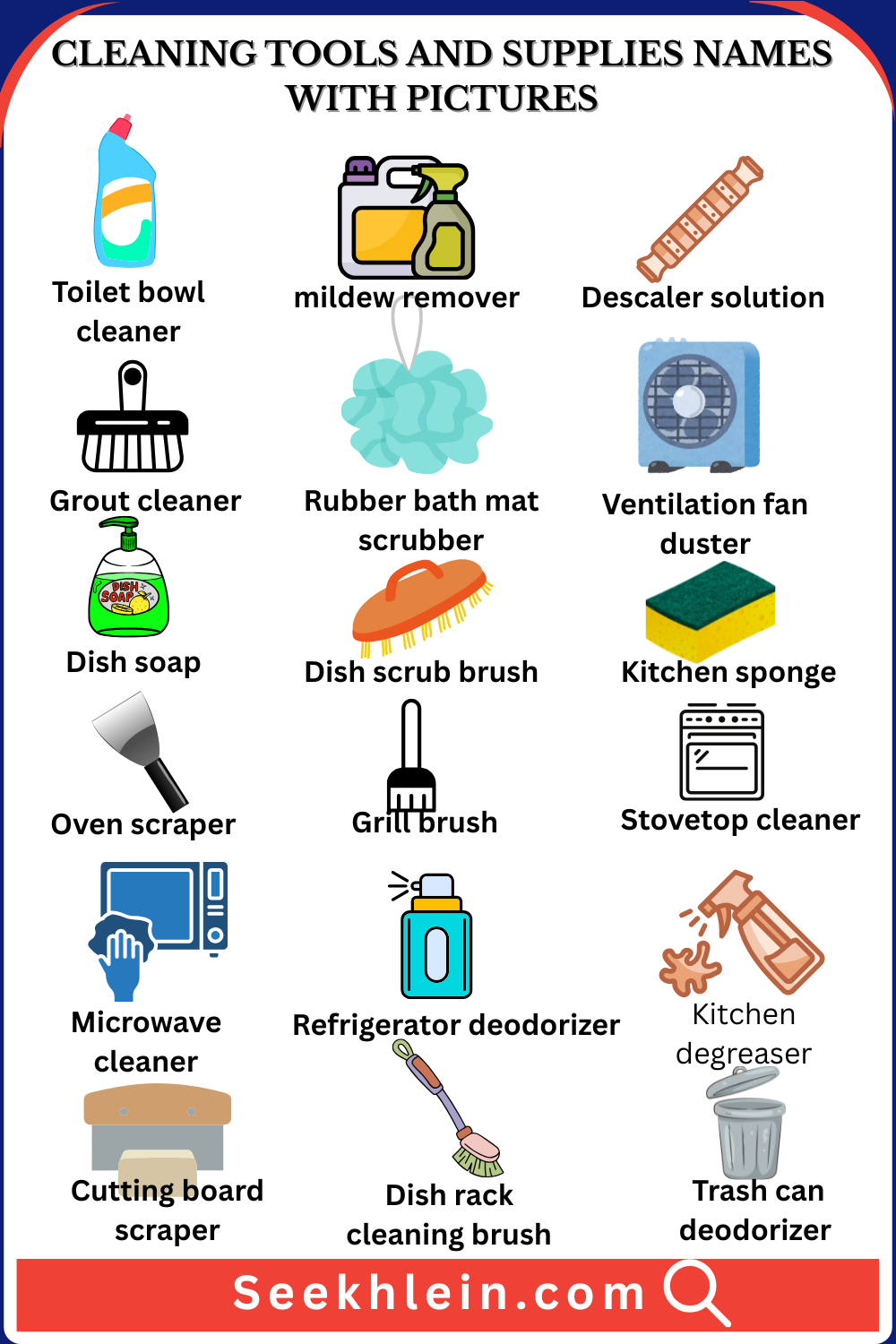
- Toilet brush – A stiff, rounded brush used to scrub the inside of the toilet bowl.
- Toilet bowl cleaner – A thick cleaning solution formulated to disinfect and remove stains inside the bowl.
- Bathroom scrubber – A handheld brush used to remove soap scum and water spots from tubs and sinks.
- Tile brush – A firm brush designed to clean bathroom wall and floor tiles.
- Shower squeegee – A small squeegee used after every shower to prevent water spots on glass doors.
- Sink brush – A compact brush used to scrub basins, faucets, and drains.
- Mold and mildew remover – A specialized spray that breaks down mold spores in damp bathroom corners.
- Descaler solution – A cleaning agent that dissolves hard water stains and limescale buildup on fixtures.
- Bathroom sponge – A dedicated sponge kept separate from kitchen sponges to avoid cross-contamination.
- Disinfecting bathroom wipes – Quick-use wipes for sanitizing toilet handles, faucets, and countertops.
- Grout cleaner – A targeted cleaner that lifts stains from porous grout lines between tiles.
- Rubber bath mat scrubber – A brush designed specifically to clean non-slip bath mats.
- Ventilation fan duster – A small brush or vacuum attachment used to clear dust from bathroom exhaust fans.
Keeping these bathroom cleaning supplies and tools together in a small caddy makes weekly deep cleaning far more efficient.
Must Have Cleaning Equipment in Kitchen
The kitchen sees daily grease, food residue, and spills, so it needs tools that cut through grime quickly and safely.
- Dish soap – A degreasing liquid soap used to wash dishes, pots, and pans by hand.
- Dish scrub brush – A stiff brush used to remove stuck-on food from cookware.
- Kitchen sponge – A soft, absorbent sponge used for daily dishwashing and counter wipe-downs.
- Countertop spray cleaner – An all-purpose spray formulated to disinfect food-prep surfaces.
- Oven scraper – A flat-bladed tool used to scrape baked-on residue from oven interiors.
- Grill brush – A wire-bristled brush used to clean grease and char off grill grates.
- Stovetop cleaner – A specialized cleaning paste or spray designed for glass or ceramic cooktops.
- Dishwasher cleaner – A cleaning tablet or liquid used to remove buildup inside the dishwasher itself.
- Garbage disposal cleaner – A tablet or gel that deodorizes and cleans the sink’s garbage disposal unit.
- Microwave cleaner – A steam-based cleaner that loosens splattered food inside the microwave.
- Refrigerator deodorizer – A product or baking soda box used to absorb odors inside the fridge.
- Cutting board scraper – A tool used to clean food residue from wooden or plastic cutting boards.
- Kitchen degreaser – A heavy-duty spray formulated to cut through built-up grease on stovetops and range hoods.
- Trash can deodorizer – A product placed inside kitchen bins to control odor between trash pickups.
- Dish rack cleaning brush – A small brush used to clean mineral buildup and grime off dish racks.
Stocking these must-have cleaning equipment in kitchen spaces ensures food-prep areas stay hygienic and ready for daily use.
Conclusion
Building a well-stocked cleaning kit doesn’t have to be complicated once you know exactly which tools belong where. From everyday essentials like brooms, mops, and microfiber cloths to specialized bathroom and kitchen supplies, each tool plays a specific role in keeping your space clean, hygienic, and easy to maintain. Use this cleaning tools and supplies names list as a shopping checklist or a quick reference guide, and you’ll always have the right tool ready for the right job — whether you’re tackling a quick daily tidy-up or a full seasonal deep clean.
Frequently Asked Questions
What are the basic cleaning tools every home needs?
A broom, mop, vacuum cleaner, microfiber cloths, sponge, scrub brush, and a spray bottle with all-purpose cleaner cover most everyday cleaning needs.
What is the difference between a dust mop and a wet mop?
A dust mop traps dry dust and hair using a dry microfiber head, while a wet mop uses water and cleaning solution to wash and disinfect floors.
What cleaning supplies are essential for the bathroom?
A toilet brush, tile brush, shower squeegee, mold remover, and disinfecting wipes are essential for keeping bathrooms clean and germ-free.
What tools should every kitchen cleaning kit include?
Dish soap, a scrub brush, sponge, countertop spray, and a degreaser are must-haves for handling daily kitchen grease and food residue.
How often should cleaning tools like sponges and mop heads be replaced?
Sponges should be replaced every one to two weeks, and mop heads every one to three months, depending on frequency of use, to prevent bacteria buildup.
Can the same cleaning tools be used in the kitchen and bathroom?
No, it’s best to use separate sponges, brushes, and cloths for the kitchen and bathroom to avoid spreading bacteria between food-prep and washroom areas.
Read more:
100+ Grain Crops Names with Pictures: Complete List