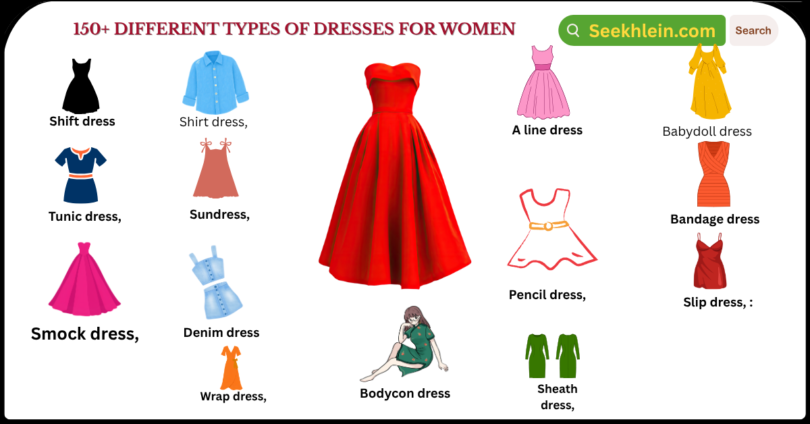

Shopping for a dress can feel confusing when every brand uses a different name for the same shape. One store calls it a shift, another calls it a sheath, and a third calls it a tunic. This guide clears up the confusion in simple, practical language.
You will learn the 150+ Different Types of Dresses for Women categories, how length changes the entire feel of an outfit, which silhouettes flatter which body types, and how to dress for any season or event. Keep this as your go-to reference before your next shopping trip.
Types of Dresses for Women
Fashion experts often say there are more than eighty recognized dress styles. Most wardrobes really only need a strong rotation drawn from around forty core types.
Knowing the correct names helps you shop smarter online. It also helps you communicate clearly with tailors .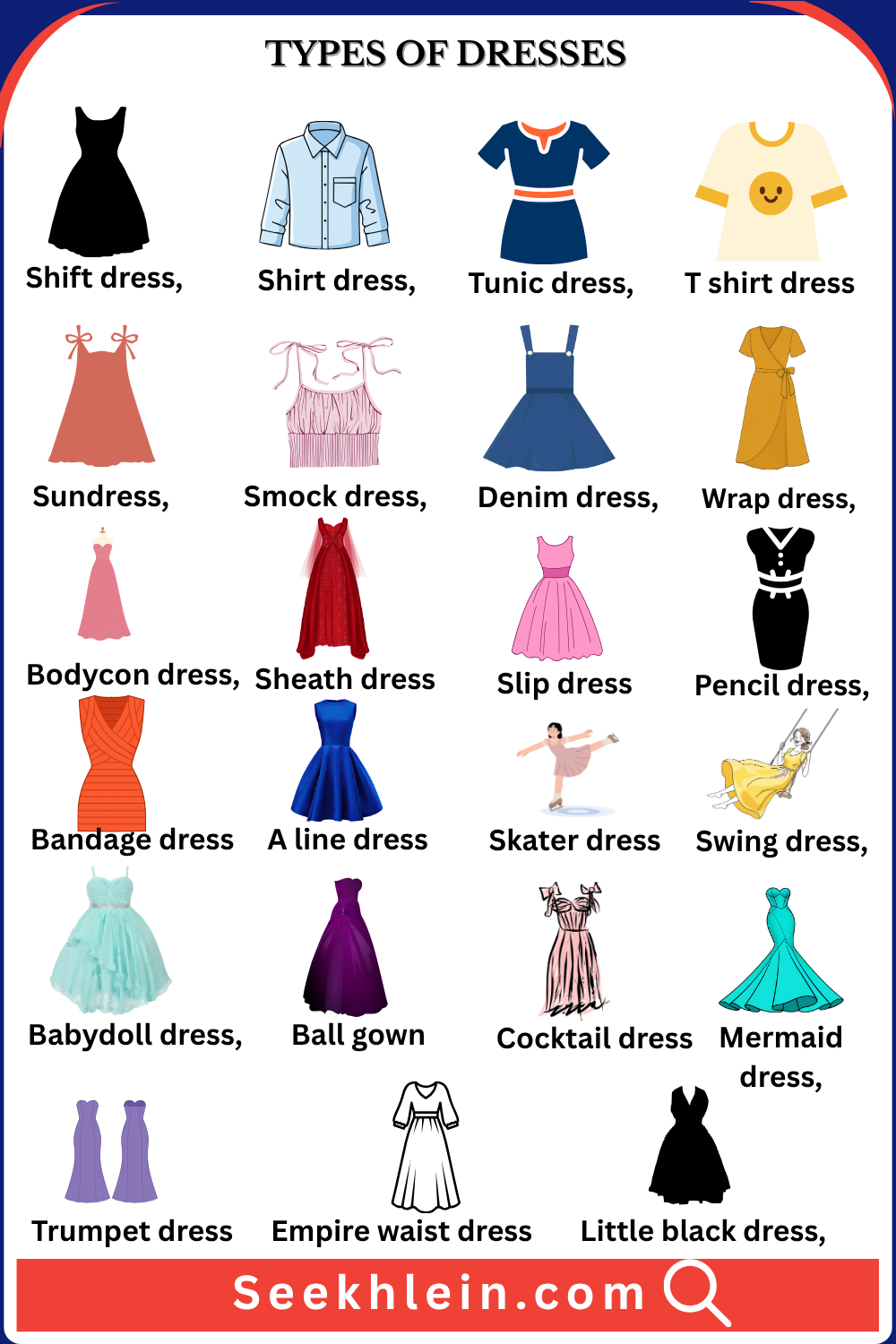
Everyday and casual styles
- Shift dress, a simple straight cut that skims the body
- Shirt dress, styled like a button up shirt but longer
- Tunic dress, loose, breathable and relaxed
- T shirt dress, soft, stretchy and comfortable
- Sundress, lightweight and often sleeveless
- Smock dress, roomy through the middle
- Denim dress, a durable casual staple
- Wrap dress, tied at the waist for an adjustable fit
Fitted and figure focused styles
- Bodycon dress, close fitting and curve hugging
- Sheath dress, structured and fitted at the waist
- Slip dress, minimalist and often made of satin
- Pencil dress, narrow through the hips
- Bandage dress, sculpted with stretch panels
Flared and full skirted styles
- A line dress, fitted top with a gentle flare
- Fit and flare dress, cinched waist with a fuller skirt
- Skater dress, fitted bodice with a flirty flare
- Swing dress, loose with built in movement
- Babydoll dress, gathered under the bust
- Circle skirt dress, a dramatic full sweep
Formal and occasion styles
- Ball gown, fitted bodice with a voluminous skirt
- Evening gown, floor length in luxurious fabric
- Cocktail dress, knee length and dressed up
- Mermaid dress, fitted with a flare below the knee
- Trumpet dress, a softer version of the mermaid
- Empire waist dress, high waistline under the bust
- Little black dress, the timeless wardrobe staple
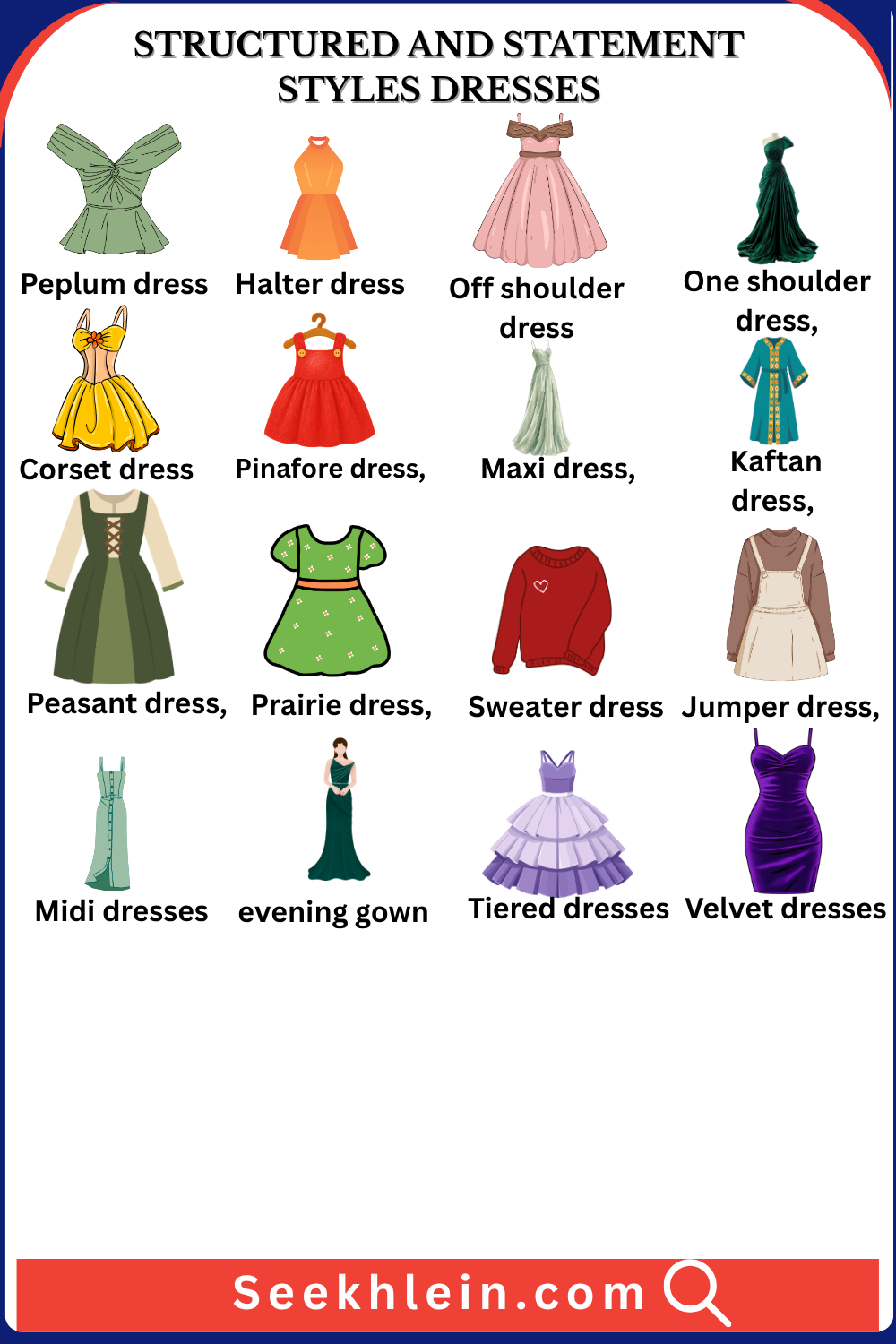
Structured and statement styles
- Peplum dress, a flared ruffle at the waist
- Halter dress, secured around the neck
- Off shoulder dress, worn below the shoulder line
- One shoulder dress, asymmetrical and modern
- Corset dress, structured for a defined waist
- Pinafore dress, worn over a top or blouse
Relaxed and boho styles
- Maxi dress, floor grazing and effortless
- Kaftan dress, flowing with wide sleeves
- Peasant dress, ruffled and gathered
- Prairie dress, vintage inspired prints
Sporty and modern styles
- Sweater dress, cozy knitwear in dress form
- Jumper dress, worn layered over a top
- Wrap midi dress, versatile and work friendly
You do not need all forty in your closet. Pick a handful that suit your lifestyle, climate, and body shape, then build outward from there.
Length Matters
Length changes everything about how a dress reads. It affects formality just as much as color or print.
Mini dresses sit above the knee. They feel casual, youthful, and playful, but are often too informal for traditional offices.
Midi dresses fall between the knee and ankle. This length is a favorite for work and weddings since it feels modern without showing too much leg.
Maxi dresses reach the ankle or floor. They suit beach holidays, summer weddings, and relaxed evenings.
Tea length dresses sit just below the knee. They carry a retro charm suited to garden parties and daytime events.
Floor length gowns are reserved for the most formal occasions, including galas and black tie weddings.
Here is a quick way to think about it:
- Shorter hemlines feel casual and youthful
- Mid length hemlines balance comfort and polish
- Longer hemlines feel formal and dramatic
Height matters too. Petite frames often benefit from hems that hit at or above the knee. Taller women can experiment with nearly any length, including dramatic maxis.
Dressing for Events
Matching a dress to an occasion gets easier once you understand basic dress codes.
For casual daytime events, a sundress or T shirt dress paired with sandals works effortlessly.
For the office, a shift dress or midi sheath dress in a solid color reads professional without feeling stiff.
For semi formal events, a fit and flare dress or cocktail dress in a richer fabric fits the mood.
For formal events like galas or weddings, an evening gown or floor length A line dress is the safest choice.
For date night, a bodycon dress or fitted midi with an interesting neckline adds a bit of drama.
A simple checklist before you get dressed:
- Check the dress code on the invitation
- Consider the venue and setting
- Think about the time of day
- Factor in the season and weather
- Match your accessories to the formality level
Smart Casual Versatility
Smart casual sits between relaxed and formal. It is the dress code that trips people up the most.
A wrap dress in a mid weight fabric is one of the most reliable smart casual choices. A belted shirt dress or midi A line dress also works well.
Keep accessories minimal to stay polished. Structured bags, block heels, and simple jewelry elevate the look without overdoing it.
Adding a blazer over a casual dress is a favorite stylist trick. It instantly bridges the gap between relaxed and dressed up.
Summer Favourites
Warm weather calls for fabrics that breathe. Cotton, linen, and lightweight jersey are summer wardrobe staples.
Sundresses remain the most popular summer choice. Their light straps and easy silhouette make them effortless.
Shirt dresses in linen blends work for both office and weekend wear. Maxi dresses in flowy rayon are ideal for beach vacations.
Tiered dresses have become a summer favorite for their breezy movement. Wrap midi dresses in floral prints transition easily from day to evening.
A few tips for summer dressing:
- Choose breathable natural fabrics
- Lighter colors reflect heat better
- Adjustable straps help you adapt fit through the day
- Pockets are a practical bonus
Cold-Weather Picks
Dresses do not disappear once temperatures drop. The key is choosing warmer fabrics and layering well.
Sweater dresses are the obvious winter favorite. Knit fabrics like wool or cashmere blends trap warmth while looking polished.
Velvet dresses bring richness suited to holiday parties. Corduroy dresses have also made a stylish comeback.
Long sleeve midi dresses in ponte knit work well for the office. Pair them with tights and boots for extra warmth.
Layering tips for cold weather:
- Add tights under shorter dresses
- Layer a sweater under a sleeveless dress
- Top with a wool coat or blazer
- Finish with ankle or knee high boots
Silhouettes That Shape
Silhouette is the overall outline a dress creates on the body. Understanding it is the most useful shopping skill you can learn.
The A line silhouette flares gently from the waist. It flatters nearly every body type by balancing proportions.
The sheath and shift silhouettes are straight and fitted. They work best for hourglass or rectangle shapes.
Fit and flare cinches at the waist and flares below. It suits apple or hourglass shapes by emphasizing the smallest part of the torso.
Empire waist sits high and skims loosely below. It is a favorite for pear shapes and anyone wanting a relaxed middle.
Mermaid and trumpet silhouettes hug the hips before flaring near the knee. They suit hourglass or straighter figures who want to highlight curves.
The wrap silhouette adjusts naturally to the body. It works across nearly every shape thanks to its customizable tie waist.
A helpful rule of thumb is to highlight your narrowest point. Let the silhouette do the rest of the work.
Cute & Casual
Not every dress needs a strict dress code. Sometimes comfort is the only priority.
Babydoll dresses offer charm without sacrificing comfort. Tiered mini and midi dresses bring playful movement with minimal effort.
T shirt dresses remain unbeatable for softness and simplicity. They pair perfectly with sneakers or flat sandals.
Denim dresses are sturdy and low maintenance. Smock dresses are forgiving and still look intentional with the right shoes.
The secret to nailing this look is simplicity. One statement accessory and comfortable footwear always look more put together than an overworked outfit.
Final Thoughts
Understanding dress types, lengths, and silhouettes removes the guesswork from getting dressed. Once you know the difference between a shift and a sheath, shopping becomes faster and far less stressful.
Start by identifying your body shape and lifestyle needs. Build a small, versatile collection around them.
A well chosen dress does more than complete an outfit. It saves time, boosts confidence, and adapts to nearly any occasion.
Frequently Asked Questions
What is the most versatile type of dress to own?
A wrap dress or midi A line dress works for nearly any setting. Both can be dressed up or down easily.
What dress length is considered most flattering?
Midi length, falling between the knee and ankle, is widely seen as the most universally flattering hemline.
How do I choose a dress silhouette for my body type?
Identify your narrowest point, such as the waist or shoulders. Choose a silhouette that highlights that area naturally.
Are sweater dresses appropriate for the office?
Yes, a well fitted knit dress in a solid color reads professional. Pair it with tights and boots for polish.
What is the difference between a sheath and a shift dress?
A sheath dress is fitted closely to the body. A shift dress has a looser, straight cut that skims rather than hugs.
Can maxi dresses be worn in winter?
Yes, choose a maxi in a heavier fabric like wool blend or ponte knit. Pair it with boots and a warm coat.
Read More:






[…] 150+ Different Types of Dresses for Women […]