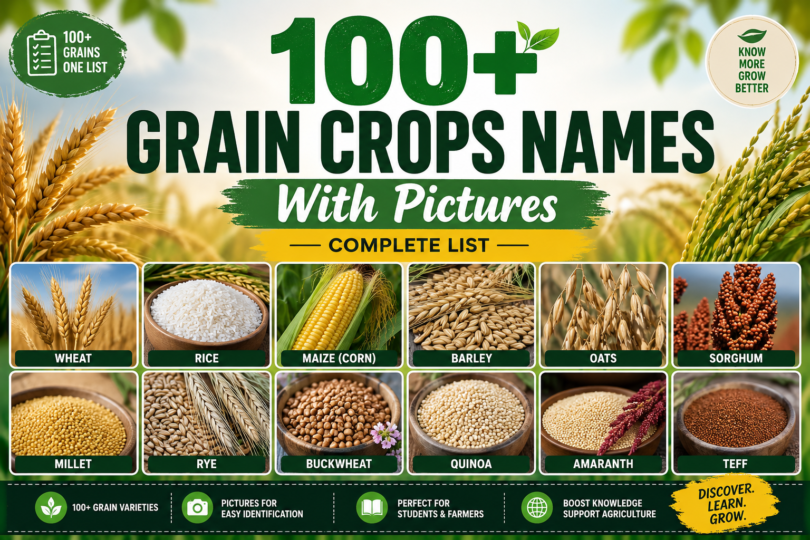

Grains show up on almost every plate, yet most people can only name three or four of them. Wheat, rice, and corn feel familiar, but terms like teff, fonio, spelt, or triticale can leave even confident English speakers guessing. This guide 100+ Grain Crops Names with Pictures: Complete List walks through the most common grain names in English, explains what makes each one unique, and clears up the mix-ups that trip up learners, home cooks, and label-readers alike.
Whether you’re building your food vocabulary, shopping for healthier pantry staples, or simply curious about what separates a cereal grain from a pseudocereal, this article gives you a clear, easy-to-follow reference. Think of it as a visual vocabulary list you can return to any time you spot an unfamiliar grain name on a package or a menu.
What Is a Grain?
A grain is the small, hard, edible seed harvested from cereal plants, most of which belong to the grass family. Farmers grow these plants in large fields, harvest the seed heads, and process them into food staples eaten around the world every day.
Each grain kernel is generally made up of three parts:
- Bran – the tough outer layer, rich in fiber, vitamins, and minerals
- Endosperm – the starchy middle portion that supplies carbohydrates and protein
- Germ – the nutrient-dense core containing healthy oils, vitamins, and antioxidants
When a grain keeps all three parts intact, it’s called a whole grain. When processing strips away the bran and germ, only the starchy endosperm remains, producing what’s known as a refined grain. This single distinction 100+ Grain Crops Names with Pictures: Complete List explains why brown rice and white rice, or whole wheat flour and all-purpose flour, come from the same plant but behave so differently in nutrition and cooking.
Grains are typically grouped into three broad categories:
- Cereal grains – true grasses like wheat, rice, corn, oats, and barley
- Pseudocereals – non-grass plants used and cooked like grains, such as quinoa and amaranth
- Ancient or named wheat varieties – older or lesser-known types of wheat, including spelt, einkorn, and emmer
Common Cereal Grain Names
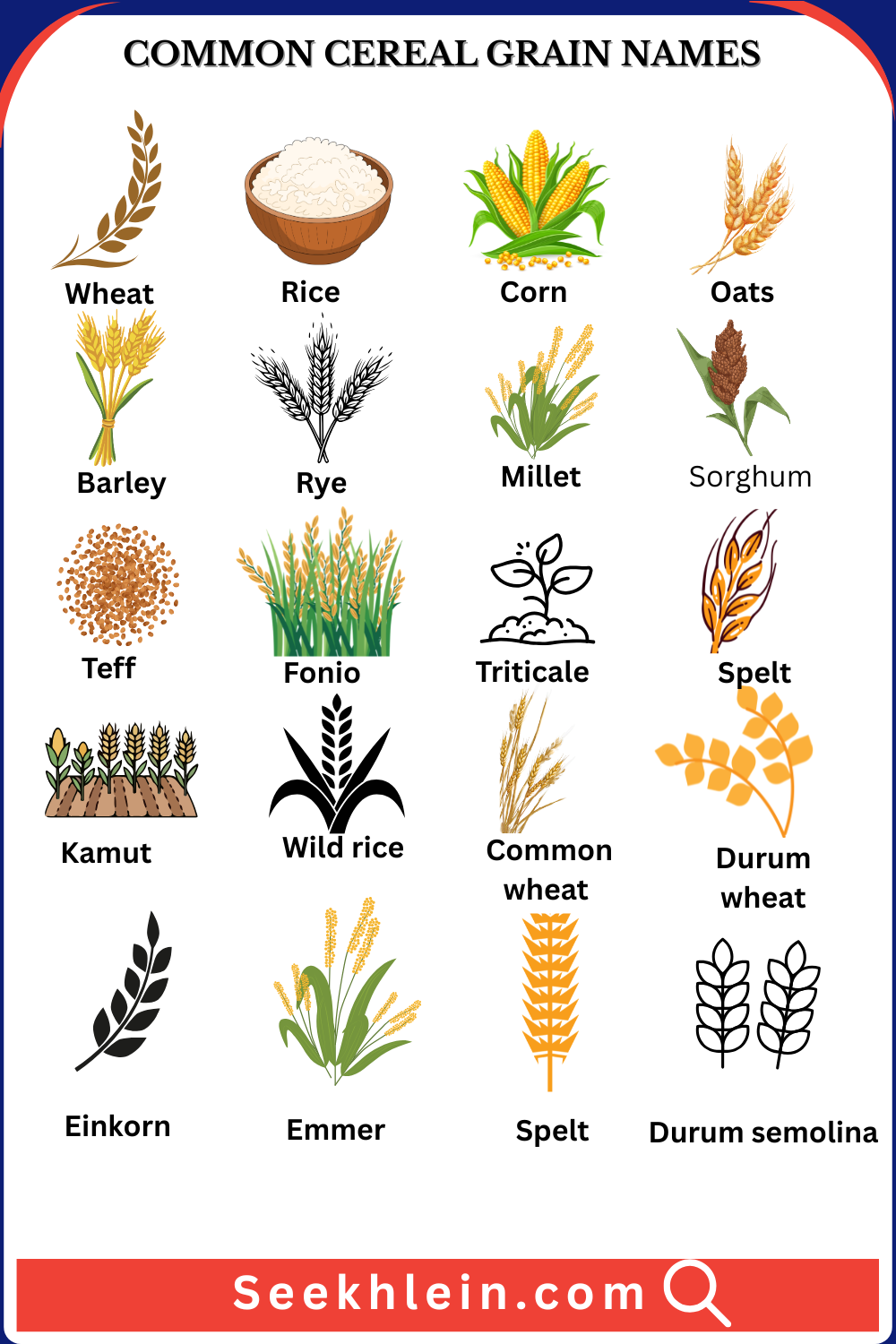
These are the grains most people encounter daily, whether in bread, breakfast cereal, or side dishes.
- Wheat – A golden-colored grain grown worldwide and ground into flour for bread, pasta, and baked goods.
- Rice – A small, starchy grain that grows in flooded paddies and serves as the staple food for a huge share of the world’s population.
- Corn (Maize) – A large yellow kernel that grows on a cob, used for cornmeal, popcorn, tortillas, and animal feed.
- Oats – A pale, oval grain typically rolled or steel-cut and eaten as porridge or oatmeal.
- Barley – A chewy, slightly nutty grain often used in soups, stews, and malted beverages.
- Rye – A dark, dense grain known for its earthy flavor and use in traditional European breads.
- Millet – A tiny, round grain that cooks quickly and appears in porridge, flatbreads, and birdseed blends.
- Sorghum – A round, tan-colored grain used for flour, syrup, and gluten-free cooking.
These eight names form the backbone of most grain vocabulary lists, and recognizing them is the first step toward understanding more specialized grain terms.
Other Cereal Grains
Beyond the everyday staples, several regional and specialty cereal grains matter in specific cuisines, even though beginner vocabulary lists often skip them.
- Teff – An extremely small grain associated with Ethiopia and Eritrea, available in brown, red, or ivory varieties and used to make injera flatbread.
- Fonio – A tiny West African grain with pale kernels and a light, fluffy texture once cooked, often served as a side dish or porridge.
- Triticale – A hybrid grain bred from wheat and rye, combining wheat’s productivity with rye’s hardiness.
- Spelt – An older wheat relative with a nutty flavor, popular in artisan breads and specialty flours.
- Kamut (Khorasan wheat) – A large, golden ancient grain with a buttery taste, often marketed as a premium wheat alternative.
- Wild rice – Technically the seed of an aquatic grass rather than true rice, known for its long, dark, chewy grains.
Learning these additional names rounds out a grain vocabulary list without turning it into an overwhelming database of obscure crops.
Wheat Grain Names
Wheat is not a single grain but a family of related grains, each with its own texture, protein content, and culinary use. Knowing these specific wheat grain names helps explain why some flours behave differently than others.
- Common wheat (bread wheat) – The most widely grown wheat species, used for most standard bread and flour products.
- Durum wheat – A hard, high-protein wheat prized for making pasta and semolina.
- Einkorn – One of the oldest cultivated wheat varieties, with a single grain per spikelet and a mild, nutty flavor.
- Emmer – An ancient wheat variety often sold as farro, known for a chewy bite and nutty taste.
- Spelt – A hulled wheat species valued for its slightly sweet flavor and use in specialty baking.
- Durum semolina – The coarsely ground endosperm of durum wheat, essential for pasta and couscous.
Because these names all trace back to the same wheat family, shoppers frequently confuse them with entirely separate grains — which is exactly why a clear breakdown matters.
Pseudocereals Used Like Grains
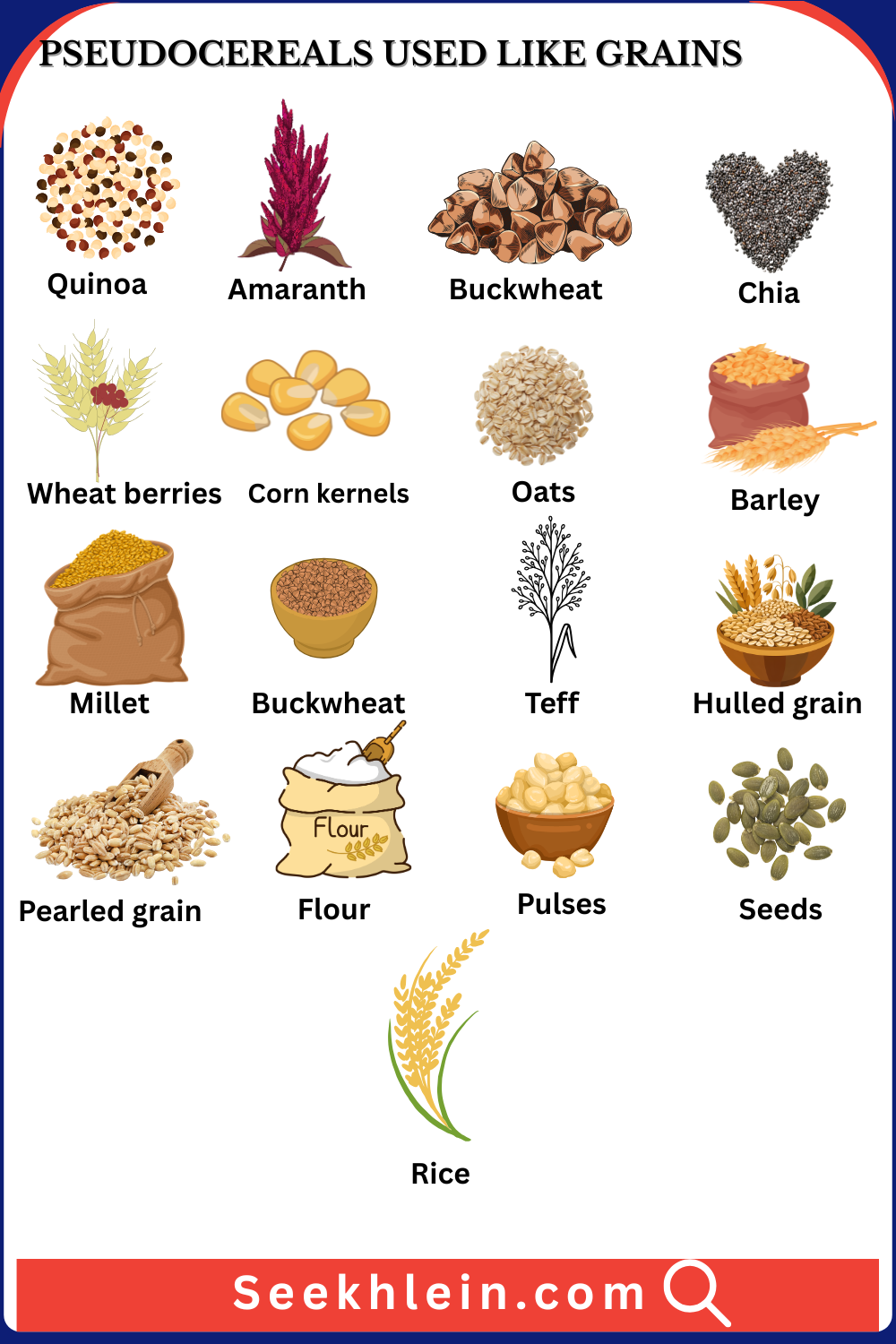
Pseudocereals aren’t true cereal grasses, but home cooks treat them exactly like grains because of how they’re harvested, cooked, and served.
- Quinoa – A small, round seed from South America, popular for its complete protein profile and mild, slightly crunchy texture.
- Amaranth – A tiny, nutrient-dense seed with a nutty taste, often used in cereals, soups, or as a rice substitute.
- Buckwheat – A dark, triangular seed related to rhubarb rather than wheat, commonly ground into flour for pancakes and noodles.
- Chia – A small seed sometimes grouped with grains due to its use in porridge-style dishes, though it’s technically a culinary seed.
Because pseudocereals are naturally gluten-free, they’ve become popular substitutes for people avoiding wheat-based grains while still wanting a similar cooking experience.
How to Recognize Grains by Shape, Size, and Color
Visual identification is one of the fastest ways to tell grains apart, especially when packaging doesn’t include a picture.
- Rice – Long, slender, and white, brown, or black depending on variety.
- Wheat berries – Oval, golden-brown, with a small crease down the center.
- Corn kernels – Large, rounded, and bright yellow, white, or multicolored.
- Oats – Pale cream, elongated, often flattened when rolled.
- Barley – Light tan, oval, with visible ridges along the surface.
- Millet – Tiny, round, and yellow to golden in color.
- Quinoa – Small, disc-shaped seeds with a visible ring that curls after cooking.
- Buckwheat – Dark brown, sharply triangular, and noticeably different from rounder cereal grains.
- Teff – Nearly dust-sized, so small that a single tablespoon contains thousands of seeds.
Color and shape become especially useful once grains are processed, since flours and flakes often lose the visual cues that make raw kernels easy to identify.
Grain Products Often Mistaken for Separate Grains
Many food names that sound like distinct grains are actually just processed forms of grains already covered above. Recognizing this prevents confusion at the grocery store.
- Grits – Coarsely ground corn, not a separate grain species.
- Polenta – Ground cornmeal cooked into a soft or firm dish, still corn at its core.
- Semolina – Coarsely milled durum wheat, not an independent grain.
- Bulgur – Parboiled, cracked wheat, made from the same wheat family listed earlier.
- Couscous – Tiny steamed pellets made from semolina wheat.
- Farro – A marketing name most often used for emmer wheat.
- Groats – Whole kernels of any grain (oat groats, buckwheat groats) with only the husk removed.
Because these products carry their own distinct names, shoppers frequently believe they’re buying a unique grain when, in reality, they’re purchasing a differently processed form of wheat or corn.
How Processing Changes Grain Names and Forms
The same grain can appear under several different names depending on how it’s milled, cracked, or cooked. Understanding this process explains why grain vocabulary feels larger than it actually is.
- Whole grain – The entire kernel, including bran, germ, and endosperm.
- Hulled grain – A grain with only the inedible outer hull removed, keeping the bran and germ intact.
- Pearled grain – A grain (commonly barley) with the bran layer polished away, producing a smoother, quicker-cooking kernel.
- Cracked grain – Whole kernels broken into smaller pieces, cooking faster than the intact grain.
- Rolled or flaked grain – Steamed and flattened kernels, as seen in rolled oats.
- Flour – Grains ground into a fine powder for baking.
- Meal – A coarser grind than flour, used in dishes like cornmeal-based bread.
This processing chain is exactly why a single grain, such as corn, can appear on a label as corn kernels, cornmeal, corn flour, grits, or polenta, even though every version starts from the same plant.
Grain Names That Commonly Cause Confusion
Some grain names sound similar or get used interchangeably, even though the plants themselves are quite different. Here’s a clear breakdown of the pairs and groups that cause the most confusion.
Corn and Maize
Corn and maize refer to the exact same grain. In American English, “corn” is the standard term, while “maize” is more common in British English and in scientific or international contexts. Both describe the large, yellow kernel that grows on a cob.
Rice and Wild Rice
Rice and wild rice are not the same plant. True rice belongs to the Oryza genus, while wild rice comes from a different aquatic grass entirely, giving it a longer, darker kernel and a chewier texture than standard white or brown rice.
Wheat and Buckwheat
Despite sharing part of a name, wheat and buckwheat are unrelated. Wheat is a true cereal grass, while buckwheat is a pseudocereal related to rhubarb, which also makes buckwheat naturally gluten-free unlike wheat.
Millet as a Grain Group
Millet isn’t one single grain but a group of small-seeded grasses, including pearl millet, foxtail millet, and finger millet. Each type varies slightly in size and color, but all are marketed under the umbrella term “millet.”
Grains, Seeds, and Pulses
Grains come from cereal grasses or grass-like plants, seeds are the reproductive part of a wider range of plants, and pulses are the dried edible seeds of legumes like lentils and chickpeas. All three overlap in the kitchen, but botanically they belong to different plant categories.
Conclusion
Grain names can feel overwhelming at first, especially when the same plant shows up under several disguises — corn as grits, wheat as bulgur, or durum as semolina. Once you understand the core cereal grains, the wheat family, the pseudocereals, and how processing changes a grain’s name, the entire category becomes far easier to navigate. Use this guide as a quick-reference vocabulary list the next time you’re reading a food label, exploring a new recipe, or simply trying to expand your everyday English vocabulary around food.
FAQs
What is the healthiest grain to eat?
Whole grains like oats, quinoa, and brown rice are generally considered among the healthiest choices because they retain their bran and germ, offering more fiber and nutrients than refined grains.
Is quinoa technically a grain?
No, quinoa is a pseudocereal, meaning it’s not a true cereal grass, but it’s cooked and eaten just like a grain.
What’s the difference between a whole grain and a refined grain?
A whole grain keeps its bran, germ, and endosperm, while a refined grain has the bran and germ removed, leaving only the starchy endosperm.
Are corn and maize different grains?
No, corn and maize are the same grain; the name simply changes depending on regional English usage.
Why do wheat, spelt, and farro all seem like different grains?
They’re all part of the wheat family, differing mainly in variety and processing rather than being entirely separate grain species.
Is buckwheat safe for a gluten-free diet?
Yes, buckwheat is naturally gluten-free since it’s a pseudocereal unrelated to wheat, despite its similar-sounding name.
Read more
Flower Names in English: 150+ Types with Photos you will amaze