
Emojis have quietly become the world’s most widely understood language. A single 😂 or ❤️ can carry more emotion than an entire paragraph, and on apps like WhatsApp, they often say what words alone cannot. But here’s the catch: not everyone reads the same emoji the same way. A 🙃 can mean playful sarcasm to one person and pure confusion to another.
This guide Emoji Meanings List: Understand Popular Emojis and Symbols breaks down the meaning of emojis used on WhatsApp and in everyday text messages. You’ll learn what the most popular emojis actually mean, why people use them so often, how different categories of emojis work, and the do’s and don’ts that keep your messages from being misread. Whether you’re texting a friend, chatting with family, or writing marketing copy, this is your complete reference for understanding emoji meanings in 2026.
What Do Emojis Mean? (And Why the Same Emoji Can Mean Different Things)
At their core, emojis are small digital pictures used to express emotions, actions, objects, or ideas without typing out full sentences. They add tone to text, something plain writing often lacks. Without a raised eyebrow or a change in vocal pitch, a message like “sure, fine” can sound cold. Add a 😅 and suddenly it reads as lighthearted.
That said, emoji meaning is rarely fixed. The same emoji can shift depending on several factors:
Culture plays a huge role. The 🙏 emoji means “please” or “thank you” in some regions, while in others it’s read purely as prayer or gratitude.
Generation matters too. Younger users often use 💀 to mean something is hilarious, while older users might read it literally as death or danger.
Platform rendering can change perception. The same emoji code can look slightly different on an iPhone, an Android phone, or WhatsApp’s own design, which sometimes changes how the expression is interpreted.
Context and relationship with the sender shape meaning the most. A 😘 from a close friend usually signals warmth or gratitude, while the same emoji from someone new might feel overly familiar.
Understanding these variables is the first step toward using emojis correctly and avoiding awkward misunderstandings in personal chats or business conversations.
Why Do People Use Emojis?
People don’t add emojis just for decoration. There are real communication and psychological reasons behind their popularity.
1. Stronger Emotional Expression
Text alone strips away tone of voice, facial expression, and body language. Emojis fill that gap. A simple 😊 at the end of a sentence softens it, while a 😢 instantly signals sadness without needing extra words.
2. Better Clarity & Context
Sarcasm, humor, and jokes are notoriously hard to detect in plain text. Adding 😉 or 😂 tells the reader exactly how a message should be taken, reducing the chance of it being misread as rude or serious.
3. Higher Visual Appeal
Long blocks of text can feel heavy and unappealing, especially on mobile screens. Emojis break up text visually, making messages easier to scan and more enjoyable to read, particularly in group chats or marketing messages.
4. Speed & Efficiency
Typing “thank you so much” takes time. Sending 🙏 or 👍 takes a second. In fast paced conversations, emojis act as shorthand that keeps chats moving without losing meaning.
5. Personalization & Relatability
Choosing specific emojis, like a favorite animal or food symbol, lets people express personality and individuality. It makes digital conversations feel more human and less robotic.
6. Proven Marketing Engagement
Brands use emojis in SMS marketing, email subject lines, and social captions because they consistently boost open rates and engagement. A well placed 🔥 or 🎉 can make a promotional message feel friendly instead of pushy.
Key Emoji Statistics You Should Know
Numbers help explain why emojis matter so much in modern communication.
More than 900 million emojis are estimated to be sent on Facebook Messenger alone every single day, excluding those sent as stickers.
Roughly 92 percent of the world’s online population is estimated to use emojis regularly across messaging apps and social platforms.
The 😂 face with tears of joy emoji has repeatedly ranked among the most used emojis globally across Twitter, WhatsApp, and text messaging platforms.
Marketing messages and emails that include emojis in subject lines often see noticeably higher open rates compared to plain text versions.
There are now well over 3,700 emojis officially recognized by the Unicode Standard, spanning faces, animals, food, objects, flags, and symbols.
These numbers confirm what most of us already sense from daily use: emojis aren’t a passing trend. They’re a permanent part of how people communicate online.
Full List: Meaning of Emojis for WhatsApp & Text Messages (Organized by Category)
Because there are thousands of emojis in circulation, the easiest way to understand them is by category. Below is a breakdown of the major groups you’ll encounter constantly on WhatsApp and in text messages, along with what each category generally represents.
What Do Face Emojis Mean on WhatsApp and in Text Messages?
Face emojis are the most frequently used emoji group by far, and they carry the heaviest emotional weight in any conversation.
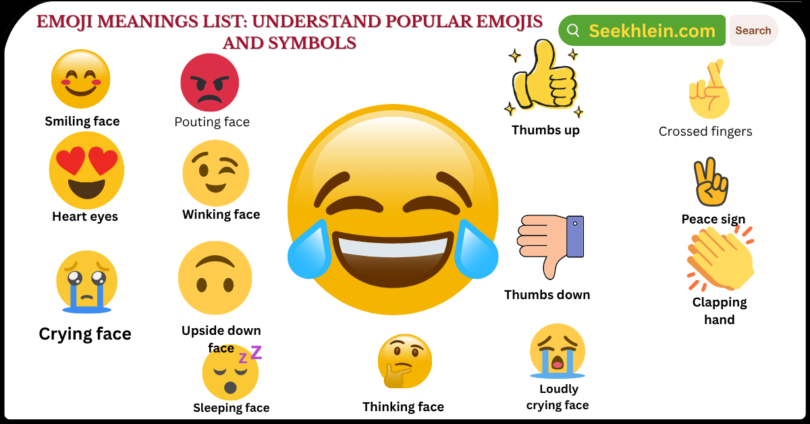
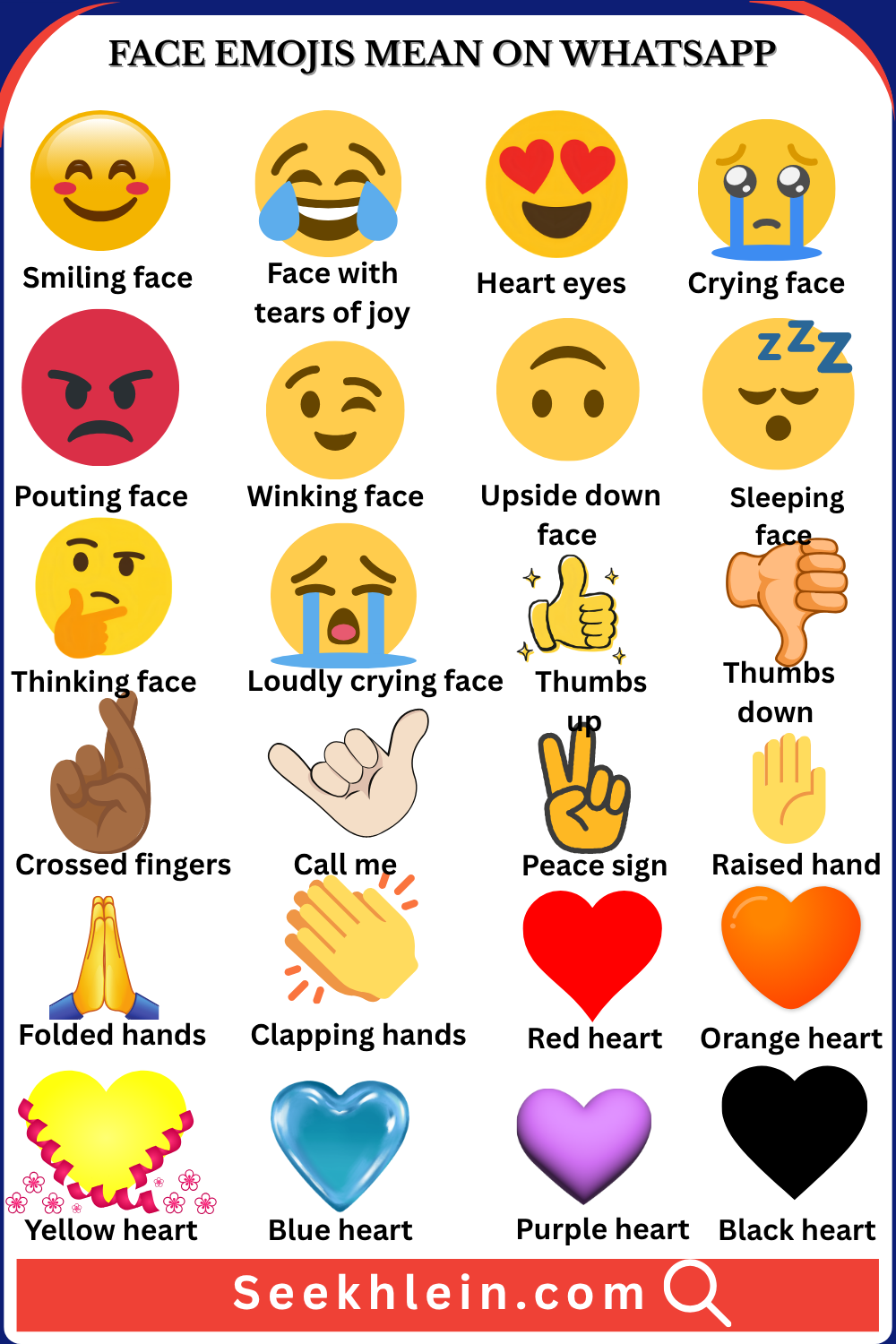
😊 Smiling face with smiling eyes generally means warmth, contentment, or friendliness.
😂 Face with tears of joy signals something is extremely funny, essentially the digital version of laughing out loud.
😍 Heart eyes expresses admiration, attraction, or being completely delighted by something.
😢 Crying face shows sadness or disappointment.
😡 Pouting face represents anger or frustration.
😉 Winking face adds a playful or flirtatious tone, often used to signal a joke.
🙃 Upside down face usually implies irony, sarcasm, or a slightly awkward “well, that happened” feeling.
😴 Sleeping face means tiredness or boredom.
🤔 Thinking face signals doubt, consideration, or that someone is processing information.
😭 Loudly crying face can mean genuine sadness, but among younger users it’s also used to express something being hilariously overwhelming.
Because facial expressions carry so much emotional nuance, this category is also the one most prone to misinterpretation, so it helps to know your recipient before sending an ambiguous face.
What Do Hand Gesture Emojis Mean? (👍👎🤞🤙✌️🖐️)
Hand emojis look simple, but they are some of the most culturally sensitive symbols in the entire emoji library.
👍 Thumbs up generally signals agreement, approval, or acknowledgment of a message.
👎 Thumbs down expresses disapproval or disagreement.
🤞 Crossed fingers means hoping for good luck or good news.
🤙 Call me hand gesture is casual, often meaning “let’s talk later” or simply signaling a relaxed, friendly vibe.
✌️ Peace sign represents peace, friendliness, or is used casually in photos and greetings.
🖐️ Raised hand can mean a high five, a greeting, or in some contexts, a request to pause or stop.
🙏 Folded hands is one of the most flexible gestures, used for prayer, gratitude, pleading, or simply saying please and thank you depending on the region and context.
👏 Clapping hands shows applause, celebration, or emphasis when repeated between words for effect.
Because hand gestures can carry different or even offensive meanings across cultures, it’s wise to think twice before sending an unfamiliar hand emoji to someone from a different background.
What Do the Different Heart Emoji Colors Mean? (❤️🧡💛💚💙💜🖤🤍🤎)
Hearts are not one size fits all. Each color has developed its own distinct emotional shade over time.
❤️ Red heart is the universal symbol of deep love, romance, or strong affection.
🧡 Orange heart typically represents warmth, encouragement, or platonic affection, often used between close friends.
💛 Yellow heart usually signals friendship, happiness, or platonic love rather than romance.
💚 Green heart can represent nature, jealousy in a joking sense, or general good vibes and support.
💙 Blue heart often conveys trust, loyalty, and calm, steady affection.
💜 Purple heart is associated with compassion, admiration, or sometimes support for a cause.
🖤 Black heart can express dark humor, edgy affection, or in some contexts, sorrow.
🤍 White heart symbolizes purity, sincerity, or a pure and simple form of love.
🤎 Brown heart is less common but often used to represent grounded, steady affection or solidarity.
Sending the wrong colored heart can genuinely change the tone of a message, so it’s worth pausing before defaulting to red every time.
People & Characters Emoji Meanings
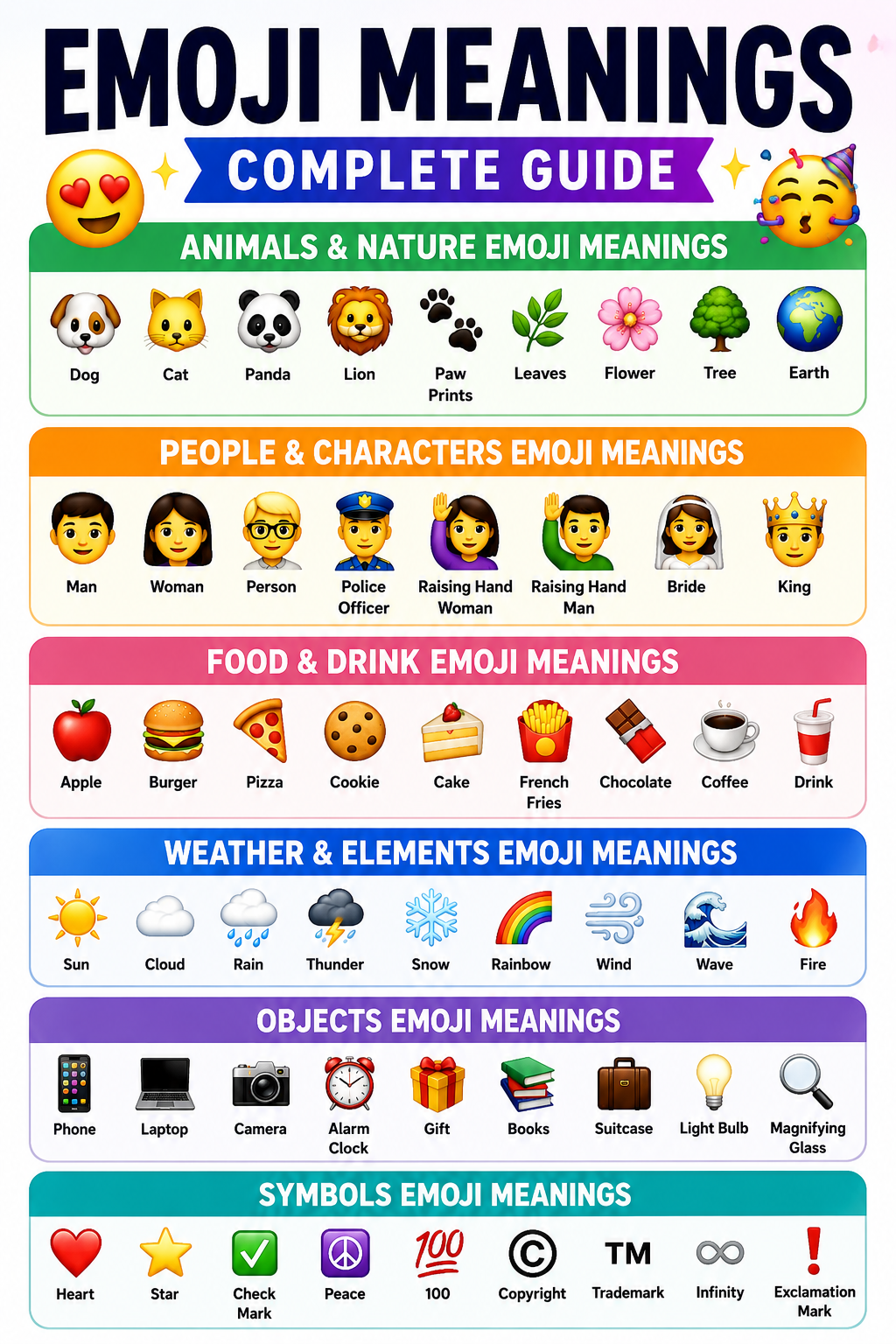
This group includes emojis representing people, professions, and expressions of identity, such as 🧑💻 for someone working on a computer, 🙋 for raising a hand to volunteer or ask something, and 🕺 or 💃 for dancing and celebration. These emojis are often used to represent yourself, another person, or a specific activity someone is doing at that moment.
Animals & Nature Emoji Meanings
Animal emojis like 🐶, 🐱, and 🦁 are sometimes literal references to pets or animals, but they’re frequently used as playful nicknames or personality traits. Nature emojis such as 🌸, 🌊, and 🌙 are typically used to set a mood, celebrate a season, or add a calming visual touch to a message.
Food & Drink Emoji Meanings
Food emojis such as 🍕, ☕, and 🍰 are commonly used to talk about meals, cravings, or plans to eat together. A few, like 🍆 or 🍑, have taken on slang meanings in certain contexts, so it’s worth being aware of your audience before using them casually.
Weather & Elements Emoji Meanings
This category covers symbols like ☀️ for sunny or positive moods, ⛈️ for stormy situations or emotional turbulence, and ❄️ for cold weather or, informally, describing someone as being distant. These emojis are often used metaphorically as much as literally.
Objects Emoji Meanings
Everyday object emojis such as 📱, 🎁, and 🔑 are typically literal, referencing phones, gifts, or keys, but some carry secondary meanings too. For instance, 🔑 can symbolize an important idea or solution, not just a physical key.
Symbols Emoji Meanings
Symbol emojis like ✅ for confirmation, ❌ for rejection or “no,” and 🔥 for something excellent or trending are some of the most versatile emojis available. They’re widely used in both casual chats and professional or marketing messages because they communicate quick judgments instantly.
Top 50 Most Used Emojis Explained in Detail
While there are thousands of emojis available, a small handful account for the vast majority of daily use. Some of the most consistently popular ones across WhatsApp and text messaging include 😂 for laughter, ❤️ for love, 😍 for admiration, 🙏 for gratitude or hope, 😊 for friendliness, 🔥 for excellence or excitement, 😢 for sadness, 👍 for agreement, 🎉 for celebration, and 😘 for affection.
Other frequently used favorites include 🙌 for celebration or praise, 💯 for full agreement or perfection, 😅 for nervous or relieved laughter, 🥰 for warm affection, 😴 for tiredness, 🤣 for uncontrollable laughter, 😎 for confidence, 🤗 for a hug or comfort, 🙄 for annoyance or sarcasm, and ✨ for something special or exciting.
These emojis remain popular because they cover the most common human emotions people express daily: joy, love, gratitude, humor, frustration, and excitement. Learning their common meanings makes it far easier to read the tone of any conversation at a glance.
Do’s of Using Emojis in Messaging
Following a few simple habits can make your emoji use clearer and more effective.
Do match the emoji to your relationship with the recipient, keeping things casual with close friends and more neutral in professional chats.
Do use emojis to soften potentially harsh or blunt statements, since a small 😅 can prevent a message from sounding cold.
Do keep emoji use consistent with your usual tone, so your messages feel natural rather than forced.
Do consider your audience’s age and cultural background before sending less common emojis.
Do use emojis to speed up quick replies, like sending 👍 instead of typing out a full confirmation.
Don’ts of Using Emojis in Messages
A few common mistakes can turn a friendly message into a confusing or even awkward one.
Don’t overload a single message with too many emojis, as it can look cluttered and reduce readability.
Don’t rely on emojis alone to communicate something important or sensitive, since tone can still be misread.
Don’t assume everyone interprets an emoji the same way you do, especially across different generations or cultures.
Don’t use flirtatious or overly casual emojis in professional or first time conversations.
Don’t ignore how an emoji renders on different devices, since appearance can shift the intended meaning.
Conclusion
Emojis have evolved from playful add ons into an essential part of digital conversation. They add emotion, clarity, and personality to messages that would otherwise feel flat or easily misread. From simple smiley faces to nuanced heart colors and hand gestures, each emoji carries its own layer of meaning, and understanding those layers helps you communicate more effectively on WhatsApp and in everyday texting.
The key takeaway is simple: use emojis thoughtfully. Know your audience, understand the context, and remember that the same emoji can land very differently depending on who’s reading it. With the meanings covered in this guide, you’re now equipped to use emojis with more confidence and fewer misunderstandings.
Frequently Asked Questions
What is the most used emoji on WhatsApp?
The face with tears of joy 😂 and the red heart ❤️ consistently rank among the most used emojis on WhatsApp worldwide.
Do emoji meanings change across cultures?
Yes, several emojis, especially hand gestures and the 🙏 symbol, carry different meanings depending on regional and cultural context.
Why do people misunderstand emojis in texting?
Misunderstandings happen because emoji rendering varies across devices and because tone, sarcasm, and humor can be hard to convey through small icons alone.
Is it unprofessional to use emojis at work?
Not necessarily. Simple, widely understood emojis like 👍 or 😊 are generally fine in professional chats, while flirtatious or ambiguous ones should be avoided.
What does the 💀 emoji mean in texting?
Among younger users, 💀 typically means something is extremely funny, similar to saying “I’m dead” from laughing, rather than referring to literal death.
How many emojis exist today?
There are now well over 3,700 emojis recognized under the official Unicode Standard, covering faces, people, animals, food, objects, and symbols.
Read More :