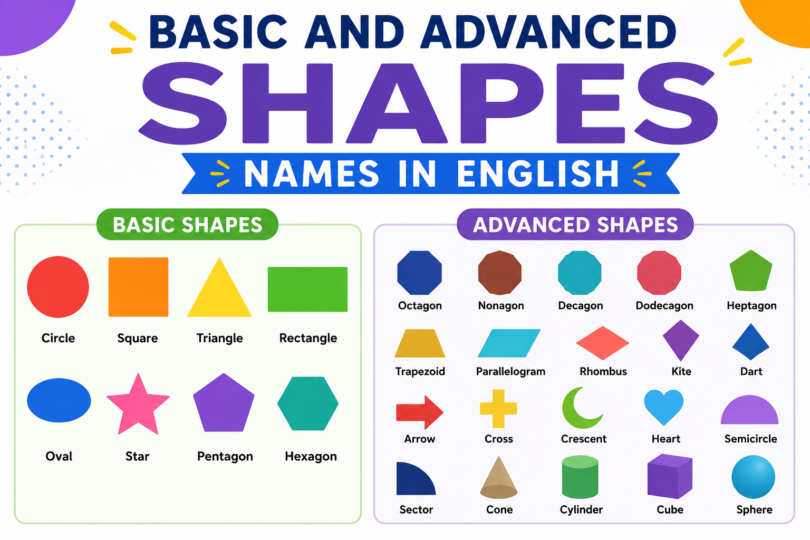

Have you ever looked at a stop sign, a honeycomb, or the pyramids of Egypt and wondered about the geometry behind them? Different Shapes Names are not just lines on paper ,they are the building blocks of everything around us. From the screen you are reading this on to the roof above your head, every structure and object in the world is built from geometric shapes.
Whether you are a student stepping into the world of geometry for the first time or simply someone who wants to refresh their knowledge, this complete guide covers 27 names of shapes with pictures, properties, and real-life examples , organized in a clear, easy-to-follow way.
Polygon with Zero Sides
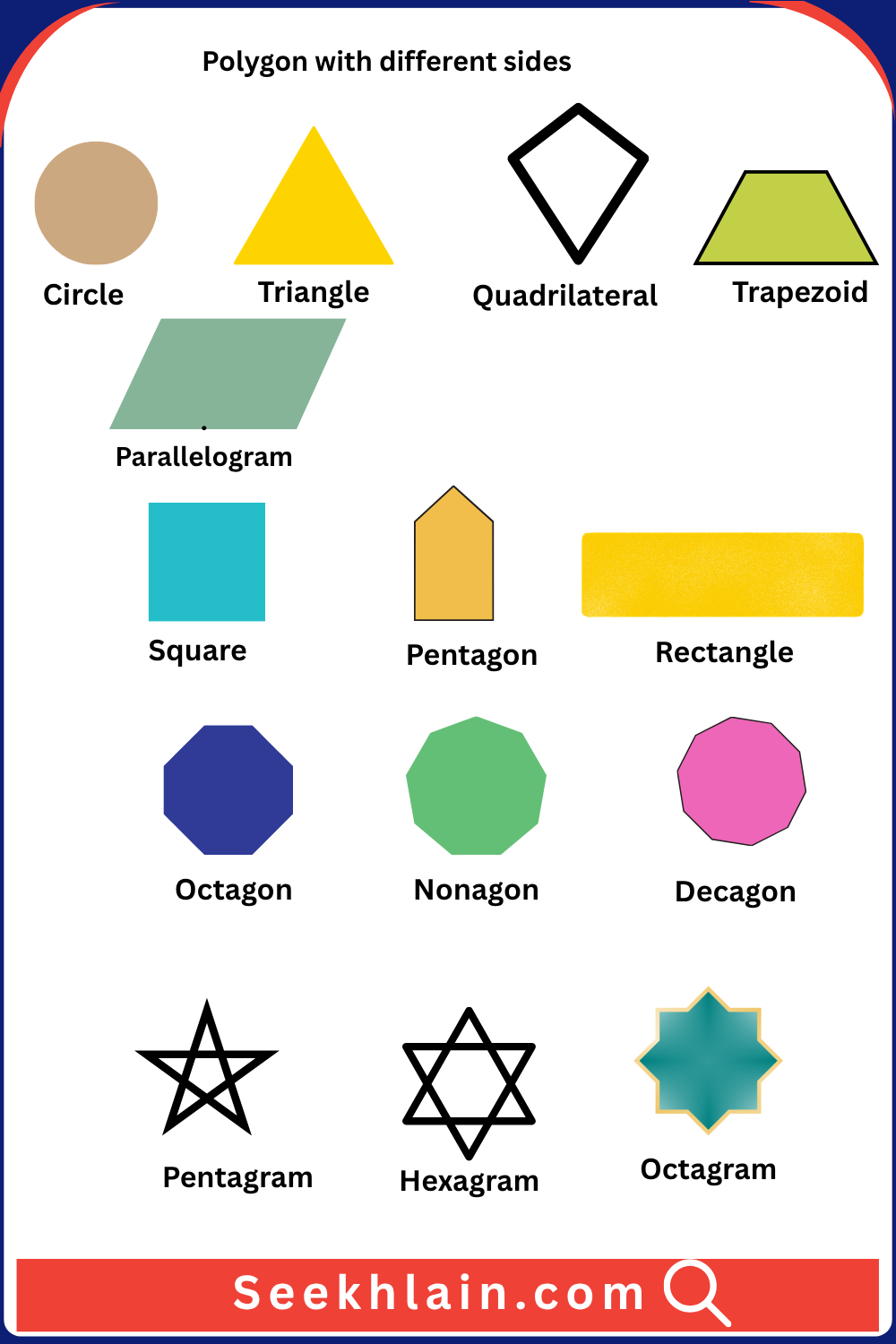
In geometry, a polygon must have at least three straight sides. A circle stands apart from all polygons. It has no straight edges, no vertices, and is defined entirely by a continuous curve.
1. Circle
A circle is a perfectly round two-dimensional shape where every point on the boundary is exactly the same distance from the center. That fixed distance is called the radius. The total distance around the circle is the circumference and a line passing through the center from one side to the other is the diameter. Circles appear in wheels, coins, clocks, and planets. A circle has infinite lines of symmetry and its area is calculated using the formula πr².

Polygon with 3 Sides
A triangle is the simplest polygon in geometry. With only three sides and three angles, it is also one of the most structurally strong shapes, which is why it appears in bridges, rooftops, and engineering frameworks.
2. Triangle
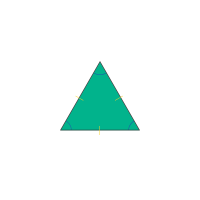
A triangle has three sides and three interior angles that always add up to exactly 180°. There are several types based on sides and angles.
Equilateral triangle means all three sides are equal and all angles are 60°. Isosceles triangle means two sides and two base angles are equal. Scalene triangle means no sides or angles are equal. Right triangle means one angle is exactly 90° and it follows the Pythagorean theorem. Obtuse triangle means one angle is greater than 90°.
Triangles appear in road signs, roof structures, pizza slices, and mathematical set squares.
Polygon with 4 Sides
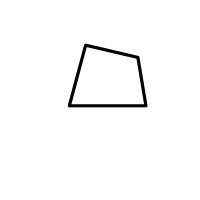
Any four-sided polygon is called a quadrilateral. The interior angles of every quadrilateral always add up to 360°. Quadrilaterals are among the most common shapes in everyday life, from windows and doors to phone screens and floor tiles.
3. Quadrilateral
A quadrilateral is any closed polygon with four sides and four angles. It is an umbrella term that covers squares, rectangles, parallelograms, rhombuses, trapezoids, and kites. Quadrilaterals can be regular, meaning all sides and angles are equal, or irregular.
4. Trapezoid
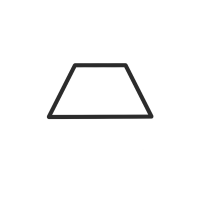
A trapezoid, called a trapezium in the UK, has exactly one pair of parallel sides known as the bases. The non-parallel sides are called legs. An isosceles trapezoid has legs of equal length. Trapezoids appear in architecture, table designs, and the cross-sections of dams.
5. Parallelogram
A parallelogram has two pairs of parallel and equal-length opposite sides. Opposite angles are also equal to each other. Rectangles, rhombuses, and squares are all special types of parallelograms. This shape commonly appears in tile patterns and structural engineering designs.

6. Kite
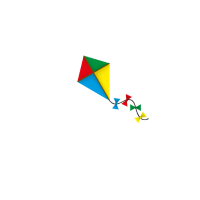
A kite has two pairs of adjacent sides that are equal in length, giving it a distinctive diamond-like appearance. One diagonal of a kite bisects the other at a right angle. The flying toy kite takes its name directly from this geometric shape.
7. Rectangle
A rectangle is a parallelogram where all four interior angles are right angles of 90°. Opposite sides are equal and parallel. Every square is a rectangle but not every rectangle is a square. Screens, doors, books, and most rooms are rectangular in shape. Area is calculated as length × width.

8. Rhombus
A rhombus has four equal sides but unlike a square its angles are not necessarily 90°. The diagonals of a rhombus bisect each other at right angles. It is sometimes called a diamond shape. Playing card diamond suits and certain floor tile patterns are classic examples of the rhombus.

9. Square
A square is the most regular quadrilateral. All four sides are equal and all four angles are exactly 90°. It is simultaneously a rectangle, a rhombus, and a parallelogram. Squares appear in tiles, chessboards, windows, and screen pixels. Area is calculated as side².

Polygon with 5 or More Sides
As the number of sides increases, polygons become progressively more circular in appearance. These shapes are named using Greek or Latin number prefixes. Penta means 5, hexa means 6, hepta means 7, octa means 8, nona means 9, and deca means 10. Learning these prefixes makes it easy to identify any polygon by its name alone.
10. Pentagon
A pentagon has five sides and five angles. In a regular pentagon each interior angle is 108° and all interior angles sum to 540°. The US Department of Defense headquarters building is famously pentagon-shaped. The cross-section of an okra pod is also a natural example of a pentagon.
11. Hexagon
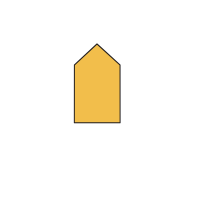
A hexagon has six sides and six angles. In a regular hexagon each interior angle is 120° and interior angles sum to 720°. Nature favors hexagons for their efficiency. Honeybee combs are built in hexagonal cells because this shape maximizes storage while minimizing material. Snowflakes and basalt rock formations also display beautiful hexagonal patterns.
12. Heptagon
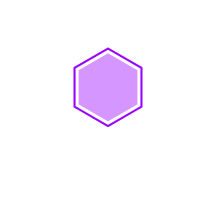
A heptagon, also called a septagon, has seven sides. Each interior angle in a regular heptagon is approximately 128.57° and interior angles sum to 900°. British 50p and 20p coins are well-known everyday examples of heptagonal shapes.
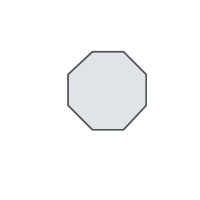
13. Octagon
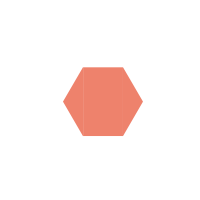
An octagon has eight sides and eight angles. In a regular octagon each interior angle is 135° and the total interior angle sum is 1,080°. The most recognizable real-world octagon is the stop sign, which is used universally in road safety across the world.
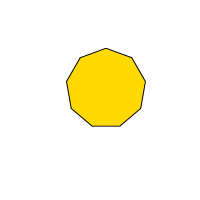
14. Nonagon
A nonagon has nine sides. The prefix nona comes from Latin meaning nine. Interior angles in a regular nonagon sum to 1,260°. Nonagons appear in some decorative architectural elements and specialized coinage designs around the world.
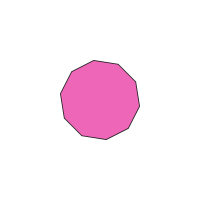
15. Decagon
A decagon has ten sides and ten angles. In a regular decagon each interior angle is exactly 144° and they sum to 1,440° in total. Decagons appear in ornate floor and ceiling tile designs and in certain architectural rosette windows.
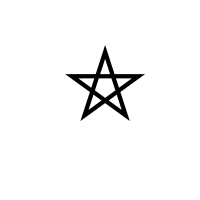
16. Pentagram
A pentagram is a five-pointed star shape formed by connecting every other vertex of a regular pentagon. It is one of the most widely recognized symbols in human history. It is featured in the flags of Morocco and Ethiopia and is used in various religious and decorative traditions. Mathematically it is written as the star polygon {5/2}.
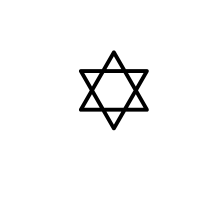
17. Hexagram
A hexagram is a six-pointed star created by overlapping two equilateral triangles pointing in opposite directions. The most famous example is the Star of David, a central symbol of Judaism that is featured on the Israeli flag. Hexagrams also appear prominently in Islamic geometric art and in Hindu and Buddhist traditions.
18. Octagram
An octagram is an eight-pointed star polygon that can be formed by overlapping two squares rotated 45° from each other. Octagrams appear prominently in Islamic geometric patterns, Byzantine art, and modern decorative design. The Rub el Hizb symbol used in Arabic calligraphy is a well-known example of an octagram.

Other Mathematical Shape Names
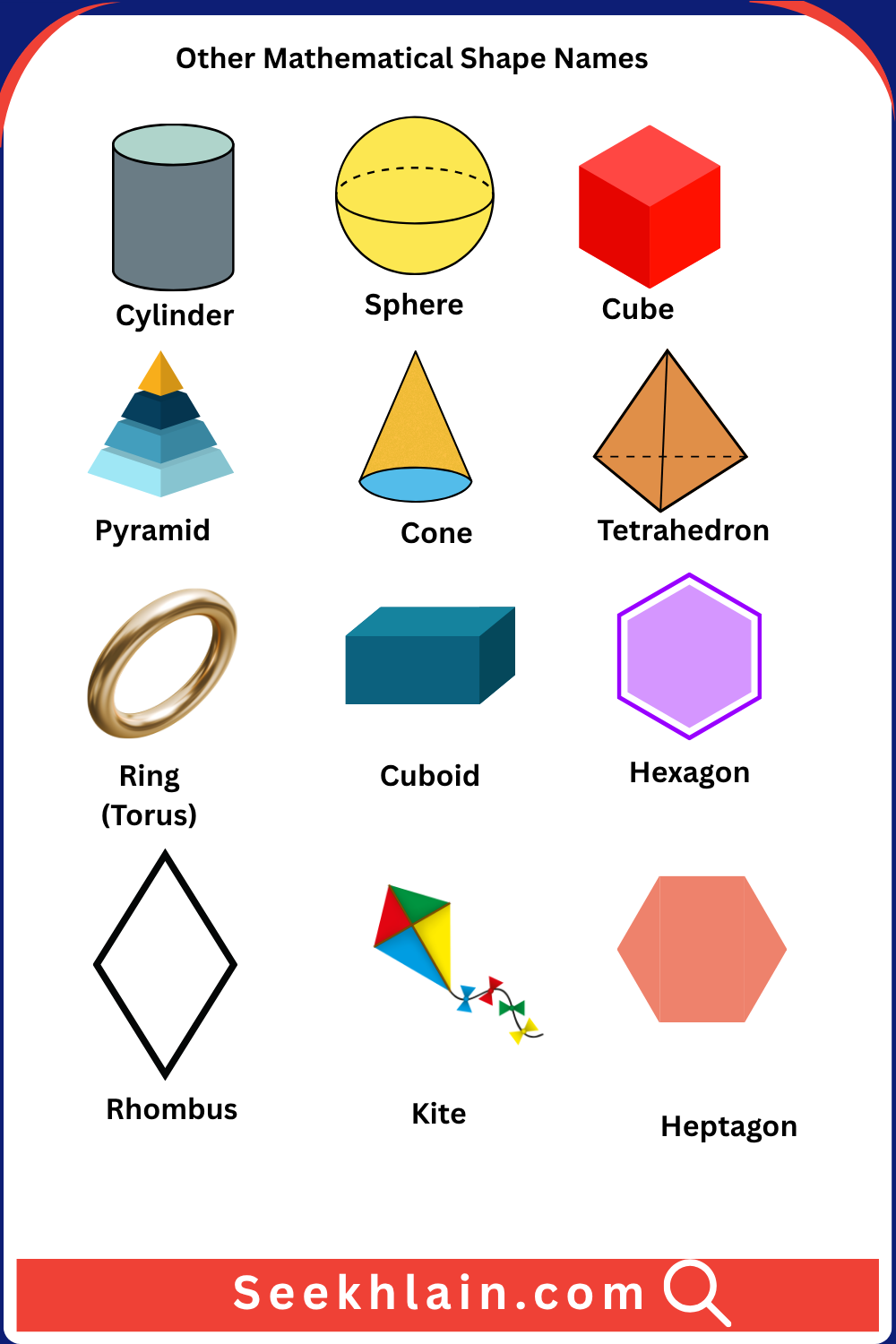
Three-dimensional shapes, also called solid shapes or 3D geometric figures, have length, width, and depth. Unlike flat 2D shapes, they occupy real physical space and have volume. 3D shapes are described by their faces which are flat or curved surfaces, their edges where two faces meet, and their vertices which are corner points.
19. Cylinder
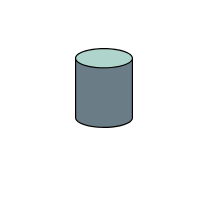
A cylinder has two identical circular bases connected by a curved lateral surface. It has no vertices or sharp edges. Real-life examples include tin cans, batteries, water pipes, and rolling pins. Volume is calculated as πr²h.
20. Sphere
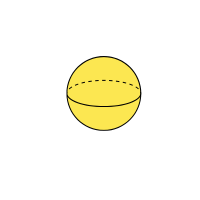
A sphere is a perfectly round 3D shape where every point on its surface is equidistant from the center. It has no edges, no corners, and one continuous curved surface. Balls, globes, soap bubbles, and planets are all real-world examples of spheres. Volume is calculated as 4/3 πr³.
21. Cube
A cube has six identical square faces, twelve equal edges, and eight vertices. All angles are right angles of 90°. Dice, sugar cubes, Rubik’s Cubes, and ice blocks are cube-shaped. A cube is a special type of cuboid where all sides are equal in length. Volume is calculated as side³.

22. Cuboid
A cuboid, also called a rectangular prism, has six rectangular faces where opposite faces are equal and parallel. Unlike a cube, a cuboid’s sides do not all have to be equal in length. Bricks, books, cereal boxes, and most rooms are cuboid-shaped.

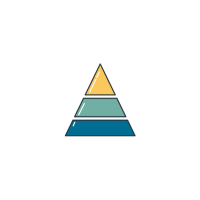
23. Pyramid
A pyramid has a polygonal base with triangular faces that converge at a single point called the apex. The most common type is the square pyramid like the Great Pyramids of Giza, which has a square base and four triangular sides. A triangular pyramid also called a tetrahedron has four triangular faces.
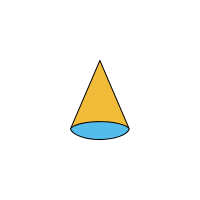
24. Cone
A cone has a circular base that tapers smoothly to a single point at the top called the apex. It has one curved lateral surface, one circular base, and one vertex. Ice cream cones, party hats, traffic cones, and funnels are all real-world examples. Volume is calculated as ⅓πr²h.
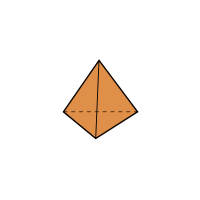
25. Tetrahedron
A tetrahedron is a polyhedron with four triangular faces, six edges, and four vertices. A regular tetrahedron where all four faces are equilateral triangles is one of the five Platonic solids. It appears in molecular chemistry where methane has a tetrahedral structure and also in modern architecture.
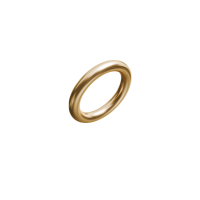
26. Ring (Torus)
A ring or torus is a 3D shape that resembles a donut. It is formed by revolving a circle around an external axis. It has one continuous curved surface with a hole through its center. Real-world examples include life rings, inflatable swim rings, bagels, and O-ring seals used in engineering.
27. Prism
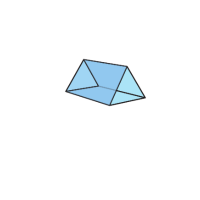
A prism has two identical parallel polygonal bases connected by rectangular lateral faces. Prisms are named after their base shape. A triangular prism has triangular bases and a pentagonal prism has pentagonal bases. Glass prisms split white light into a rainbow spectrum. Toblerone chocolate boxes and camping tents are classic triangular prism examples.
3D Shape Properties Quick Comparison
| Shape | Faces | Edges | Vertices | Real-World Example |
| Cube | 6 | 12 | 8 | Dice, ice cube |
| Cuboid | 6 | 12 | 8 | Book, brick, box |
| Sphere | 1 curved | 0 | 0 | Football, Earth |
| Cylinder | 3 | 2 curved | 0 | Tin can, pipe |
| Cone | 2 | 1 curved | 1 | Ice cream cone |
| Pyramid | 5 | 8 | 5 | Great Pyramid of Giza |
| Tetrahedron | 4 | 6 | 4 | Molecular structure |
| Prism | 5+ | 9+ | 6+ | Tent, Toblerone box |
| Ring/Torus | 1 curved | 0 | 0 | Donut, life ring |
Conclusion
From the elegant simplicity of a circle to the structural complexity of a prism, geometric shapes form the visual language of mathematics and the physical world. Knowing the names of shapes helps build spatial reasoning, strengthens STEM learning, and deepens your appreciation for the patterns found all around us in nature and design.
Whether it is the hexagonal cells of a honeycomb, the spherical shape of a planet, or the triangular frame of a bridge, geometry is everywhere once you know what to look for. Keep this guide as your reference and you will start seeing the world through an entirely new geometric lens.
Frequently Asked Questions
What is a polygon?
A polygon is a closed 2D shape made entirely of straight lines, with at least three sides. Circles are not polygons because they have no straight edges.
What is the difference between 2D and 3D shapes?
2D shapes are flat with only length and width, while 3D shapes have length, width, and depth meaning they occupy real physical space.
What shape has the most sides?
There is no theoretical limit, and polygons can have any number of sides, where a shape with millions of sides looks visually identical to a circle.
Is a circle a polygon?
No, a circle is a curved shape with no straight edges or vertices, and a polygon must be made entirely of straight sides.
What is a regular polygon?
A regular polygon has all sides equal in length and all interior angles equal, such as an equilateral triangle, a square, or a regular hexagon.
What are the five Platonic solids?
They are the tetrahedron with 4 faces, cube with 6 faces, octahedron with 8 faces, dodecahedron with 12 faces, and icosahedron with 20 faces, each made of identical regular polygonal faces.
What is the difference between a rhombus and a square?
Both have four equal sides, but a square requires all four angles to be exactly 90° while a rhombus can have angles that are not right angles.
What is an irregular polygon?
An irregular polygon has sides or angles that are not all equal such as a scalene triangle or a non-rectangular quadrilateral.
Read More: