“In dominant Western culture, nobody ever teaches us how to face death — we're simply ordered to survive,” says Sarah Kerr. “But when death is your destination, how exactly are you supposed to do that well?”
Working as a death doula in Victoria, BC, Kerr has spent much time thinking about dying and grieving, along with the rituals surrounding these acts. She founded theCentre for Sacred Deathcareto help individuals face death—whether their own, another person’s, or a beloved animal’s—with “more grace and more confidence.” She offers support and guidance at every step of the journey, “leading up to the last breath, at the last breath, after the last breath.” From the outside, Kerr’s job might seem morbid or depressing, but she insists the opposite is true. “It is enlivening and invigorating and inspiring, because I get to see and be in these spaces of incredible love.”
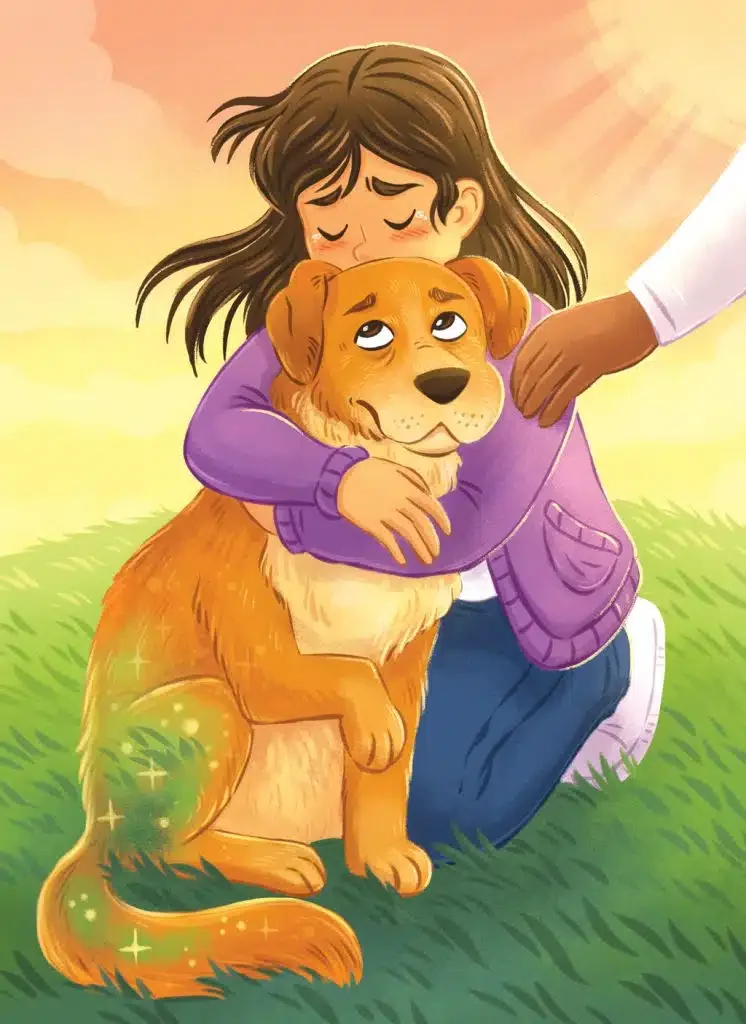
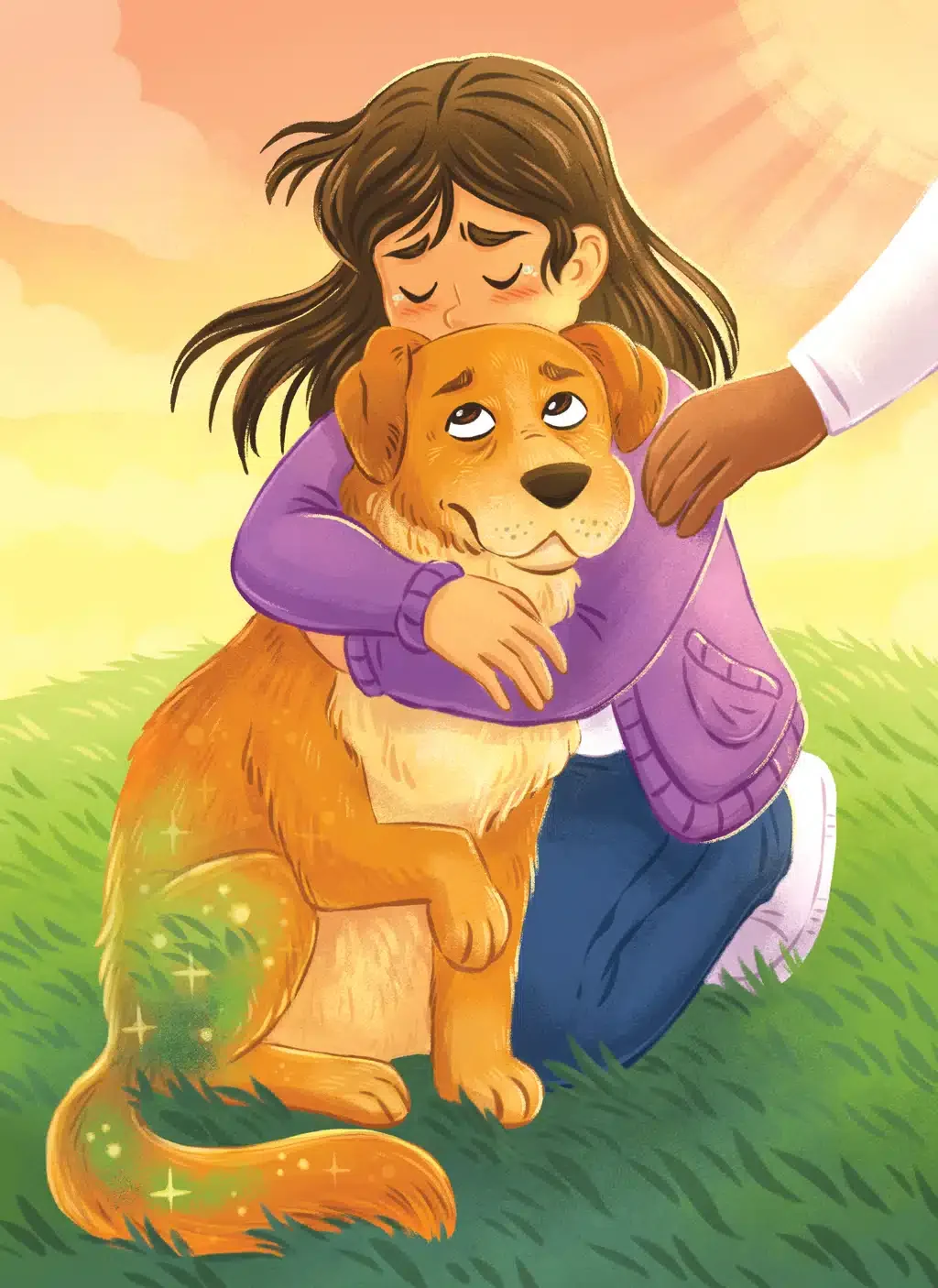
Illustration by Michelle Simpson
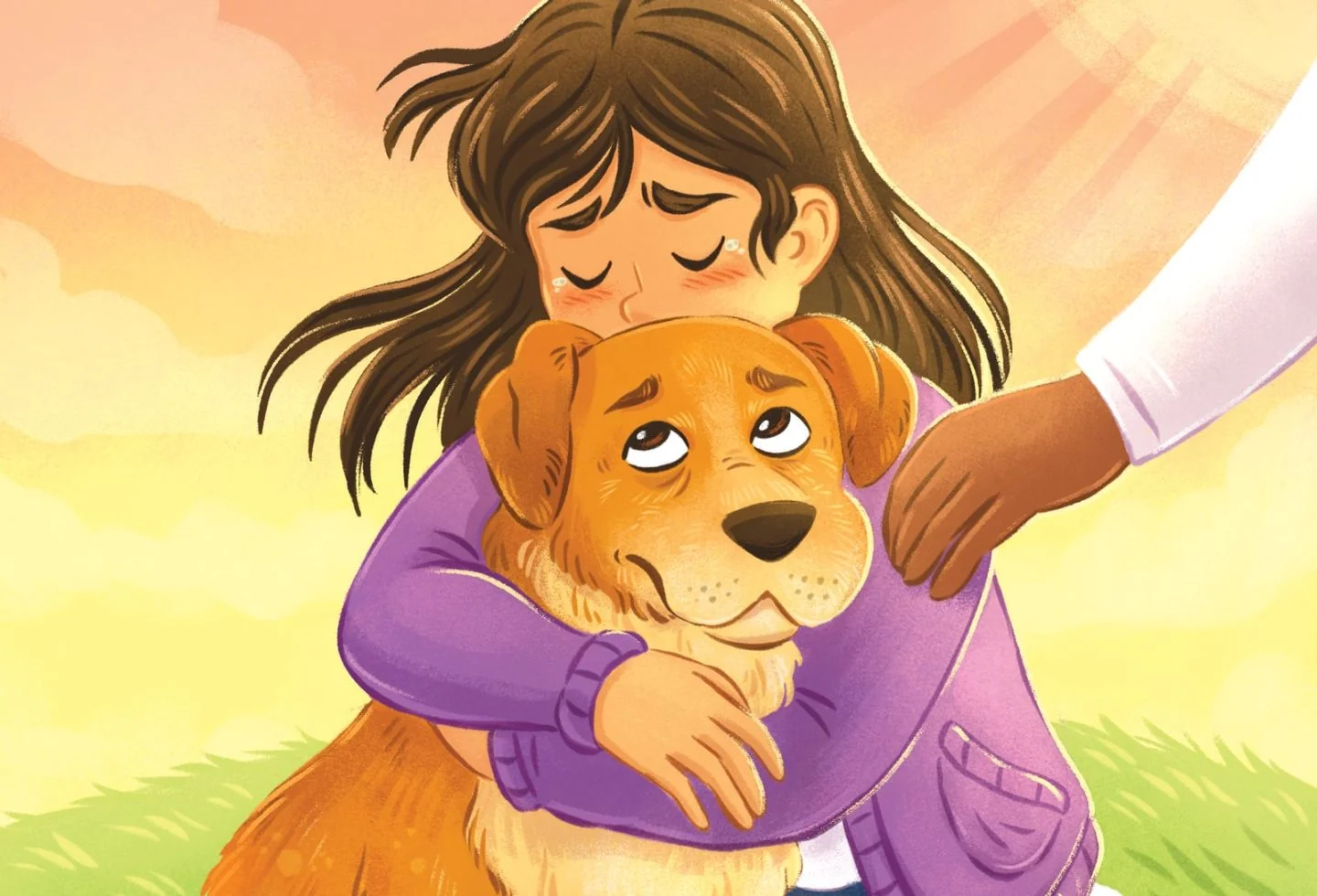
the loyal century — When your beloved pet reaches the end of their road, a death doula or pet-loss companion can become your lifeline in so many heart-soothing ways.
When your dog or cat is slipping away, good luck finding a friend or relative who won't squirm or try to shut the whole conversation down with a hollow platitude. A death doula simply listens, grieves with you, and pulls from hard-won experience to offer real, practical guidance.
“Western society has built this towering taboo — this gut-level revulsion to death — even though death is life's constant partner,” says Kristina Bohler Golden, an end-of-life doula in St. Louis, MO, cofounder of the death-positive festival Last Call and a teacher in the International Doula Life Movement's Certified Pet Doula Program. “Every single one of us will face it. Everyone will walk through it. So it's certainly nothing we should dread or shy from.”
People get so tongue-tied about death that they clam up entirely and let a grieving soul suffer in silence. Golden names the pain: “Any time somebody suffers from grief, it's brutally isolating. But losing a pet makes it even worse, because you feel like you can't tell anyone — they'll just try to cheer you up by saying, 'Well, it wasn't your grandma.'” A huge chunk of Golden's job is simply bearing witness. “I'm here if you just want to talk to someone and feel heard,” she says. “You're hurting over a loss that many people in your life simply don't get.”
“I'm here if you just want someone to talk to and feel truly heard,” she says. “You're mourning a loss that others in your life may never understand.”
the loyal century — Tracey Walker echoes that frustration with our culture's squeamishness. A death doula in Grand Rapids, MI, she designed the curriculum for the University of New England's brand-new End-of-Life Pet Doula Professional Certificate, an online program for non-medical caregivers. “Talking about sex won't get you pregnant, and talking about death won't kill you,” she quips. “We're not manifesting it. We're preparing ourselves.”
A death doula becomes your emotional sounding board through the most gut-roiling choices a pet owner will EVER face: Is euthanasia the kindest option left? When do we schedule it? At the vet's office or in the comfort of home? Walker treats it as her mission to help owners see when the time has truly come. After all, as she points out, pets “can't put into words that they want to die — which, frankly, is something a lot of my human clients do.”
Walker says bringing in a knowledgeable, compassionate third party to share the process brings real comfort to pet owners. “When the practical side is handled, it lifts a weight off their shoulders, so they can just be emotionally present with their pet — instead of spiraling over, 'Am I doing the right thing? Should we wait? Should I call someone else?'”
Coleen Ellis, based in Dallas, TX, opened the very first pet funeral home in America over two decades ago and now heads Two Hearts Pet Loss Center, which she also founded. “Even though euthanasia literally means 'good or fortunate death,' it never feels that way,” she says, acknowledging the crushing weight of that call. A death doula can lift part of that burden off you.
That bucket list could include rituals like a farewell tour through their beloved park — even if you have to drag them along in a wagon — or one last glorious run through the fast-food drive-thru for their all-time-favourite treat.
the loyal century — A 'bucket list' for a dying person is nothing new — but almost no one thinks to build one for a beloved animal. Whenever Ellis steps in to help an owner “walk in that anticipatory grief journey,” she urges them to draft a bucket list made just for their pet. “Let's leap forward six months and look back on this season and ask ourselves: 'What can I do right now so I don't end up with a coulda, shoulda, woulda when it's over?'” she says. “So that when the day comes, we can honestly say the ending was perfect.”
Ellis still chokes up telling the story of one owner who took her advice to heart. She painted a grand portrait of her beloved pooch, then she and her ailing dog spent three glorious days conquering every single bucket-list item. On the day scheduled for euthanasia, she chalked a rainbow across her driveway; friends and family walked over it to come say their final farewells. The dog was laid to sleep right on that rainbow, encircled by everyone who loved her. For days afterward, the owner kept her body beneath the portrait so even more people could pay their respects. Sobbing, she later told Ellis, “The end was perfect. There's not one regret, not one thing left undone.” That dog's goodbye, Ellis says, was “a crescendo to a life well lived, a life loved, a life shared.”
Photo CreativePhotoTeam.com/Bigstock
Then there was the client whose cat adored snuggling in the sock drawer. “I said then what I might recommend is when we put him to peace, he is put to peace in the sock drawer, where he’s surrounded by his heaven on earth,” Ellis recalls. “And that’s what they did.”
“What if people think I'm weird?” is the question Ellis hears nonstop. “Then tell them to leave your house,” she fires back. “You do whatever you need to do to honour your baby.” Normalizing grief is a giant slice of her mission. “All day long I tell people, 'I give you permission to feel exactly how you feel, and to hold whatever ritual you need to hold.'” If a client needs to sob, Ellis cheers them on: “We're gonna sit right here and snot-bubble cry.” If a client needs to rage, Ellis champions that too: “You can scream and holler, punch that wall, be furious at me, even be furious at God.”
the loyal century — She refuses to downplay how profound a bond with a pet truly is. “Here's this tiny creature whose only job in life is to love you. That's it. They'll never graduate, never cure cancer — they'll do one thing: love you. And that is powerful. That is so stinking powerful.”
Well-meaning friends and relatives often push a grieving pet parent to just "get over" it pronto — usually by rushing to adopt another dog or cat. Joe Dwyer, a New Jersey pet-loss companion and ordained animal chaplain, warns this "isn't done out of malice, but it doesn't actually help the person grieving." He adds that in today's Western culture, most folks can barely admit that losing a pet can hit "as hard as losing a parent or a sibling." Dwyer lets himself grieve right beside each person he helps: "If you don't feel emotionally drained after sitting with someone who's lost a beloved pet, then you're not doing it right."
Plenty of pet parents fret that holding a funeral or memorial for an animal is somehow wrong — or they dread a stiff, empty ceremony. But Dwyer, a deeply religious man himself, reassures everyone that there's zero obligation to follow rigid church rules. “We can do absolutely whatever you'd like,” he says. “If you're Christian, you don't have to use scripture — a poem works fine. If you're Jewish and want to read a New Testament verse, go for it. This isn't a one-size-fits-all operation.” His advice: “Open your mind and heart to whatever will bring you the most peace.”
“All I can say is, I hope my own funeral is this beautiful when my time comes.”
Rituals are the lifeblood of healthy grief. “Every culture on Earth has recognized that you need a ritual after a death,” says Sarah Kerr, whose doctorate explores transformative learning with a focus on ritual and rites of passage. “A good funeral is a grief ritual — it creates space for our sorrow, helps us process it, lets us gather in community, name our loss and lean on one another.”
the loyal century — Coleen Ellis once helped orchestrate a memorial for a tabby cat named Vincent. Afterward, one guest confessed sheepishly, “I only came because I was curious what a funeral for a cat even looked like.” When Ellis asked what he made of Vincent's service, his answer floored everyone: “I hope my own funeral is this beautiful one day.”
Kristina Bohler Golden walks beside grieving clients by hosting craft nights — building collages and scrapbooks from pet photos and dreaming up creative ways to repurpose old toys. “Being creative together, then talking it through, can be incredibly cathartic,” she says. She also points clients to companies that make keepsakes like paw prints, or plush replicas of the lost pet with a touch of its ashes tucked within.
For end-of-life rituals, it helps to “create a sacred space for whatever you want to do” — think photos, flowers, a blanket and a basket, suggests Madeline Christie, founder of Daisy Deathcare in Courtenay, BC. She advises keeping the pet's body for a few hours or even overnight before burial or cremation, giving the heartbroken owner time to adapt to the stark new reality. “They were just here — warm and breathing — and then suddenly they're not,” she says. “I think it's just a healthier way of saying goodbye.” Through every ritual, a death doula like Christie offers support “emotionally, logistically and spiritually.”
Facing a pet's loss means drowning in gut-wrenching decisions: home euthanasia or at the vet's office? Cremation or aquamation (alkaline hydrolysis, aka water cremation)? Home burial or a pet cemetery? Memorial or funeral? A death doula brings the knowledge, experience and emotional distance to guide you. Kristina Bohler Golden's clients frequently exhale in relief after getting direction, saying things like, “I'm not lost anymore. I'm not adrift. I don't have to frantically Google every random thing.”
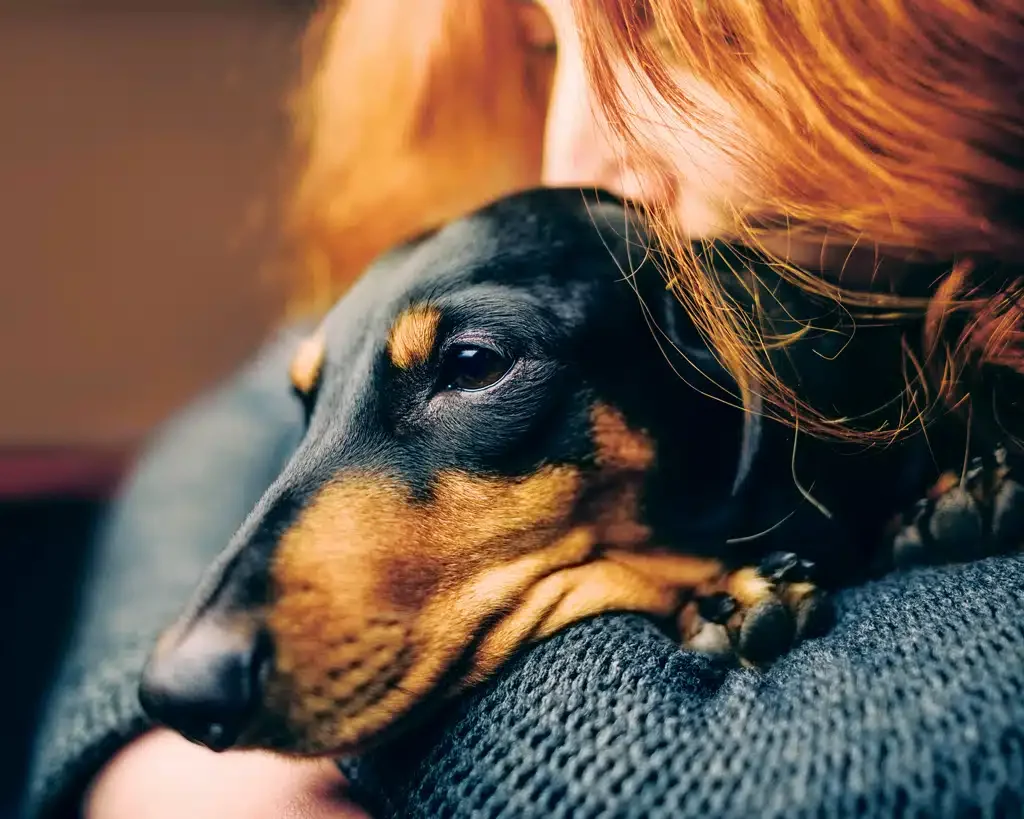
Even death doulas call in other death doulas for themselves. “I've used pet-death doulas, and it made all the difference in the world,” Tracey Walker reveals. “For me, it gave me the presence I needed to be fully there for my little girl — my soul cat.” Walker explains how having someone manage the details frees a grieving person to simply soak up precious time with their loved one at the very end. The help can be as simple as filling out paperwork or running to the pharmacy for a prescription — or as profound as holding your hand while the vet delivers that final injection. Above all, a pet-death doula's role is built on endless listening and gentleness.
the loyal century — “There's no way you can do this alone,” Sarah Kerr insists. She's profoundly grateful to a death doula — a former student — who lifted her up in her own darkest moment. “She was crucial for holding the space and keeping the bigger picture alive. When you're grieving, you're floundering in the soup of the present moment,” Kerr says. “When you're in that place, you've completely come undone.” And that unravelling is precisely what proper grieving demands. “Because death is supposed to undo you — so feeling sad doesn't mean you're failing. It means you're doing it right.”
Death doulas bring wildly different styles to the work, Kerr explains. “I take a spiritual, ritual-and-soul approach — completely unlike another doula trained by a retired hospice nurse who's all about bedside care.” The real secret is finding someone who truly clicks with you in that emotionally fragile season. “Even amid death and loss and heartbreak, there can be beauty, love, laughter, inspiration and renewal,” she says.
Want to find a practitioner near you? Browse regional lists from organizations like the International Doula Life Movement and the National End-of-Life Doula Alliance. Plenty of death doulas are seasoned pros at guiding both humans and pets through their final chapters.
Obsessed with this story yet? Then buckle up, because there's a whole kennel of tail-wagging, heart-pumping adventures waiting in every issue of Modern Dog magazine. Smash that subscribe button RIGHT NOW — you definitely won't want to miss a single paw-print!