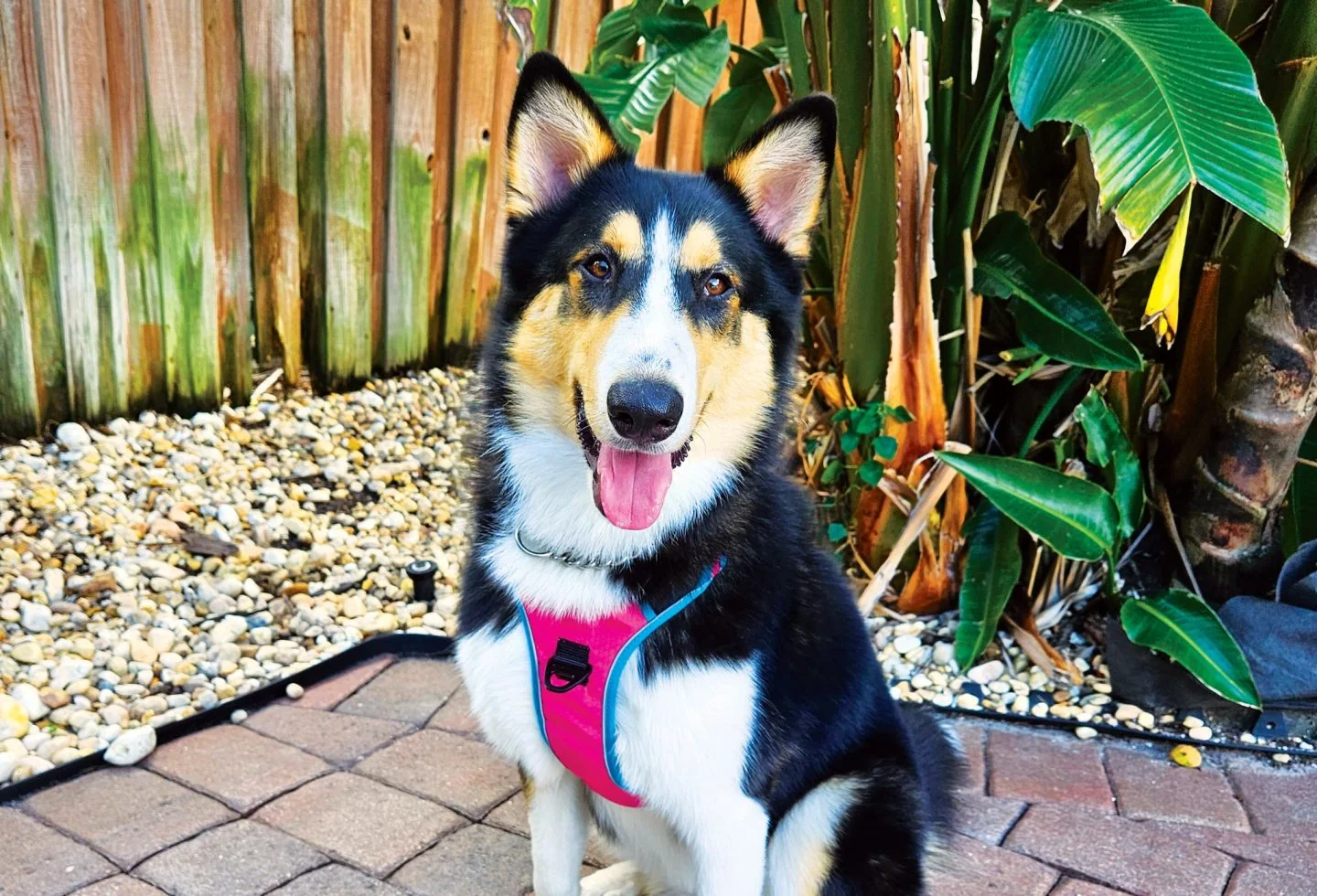
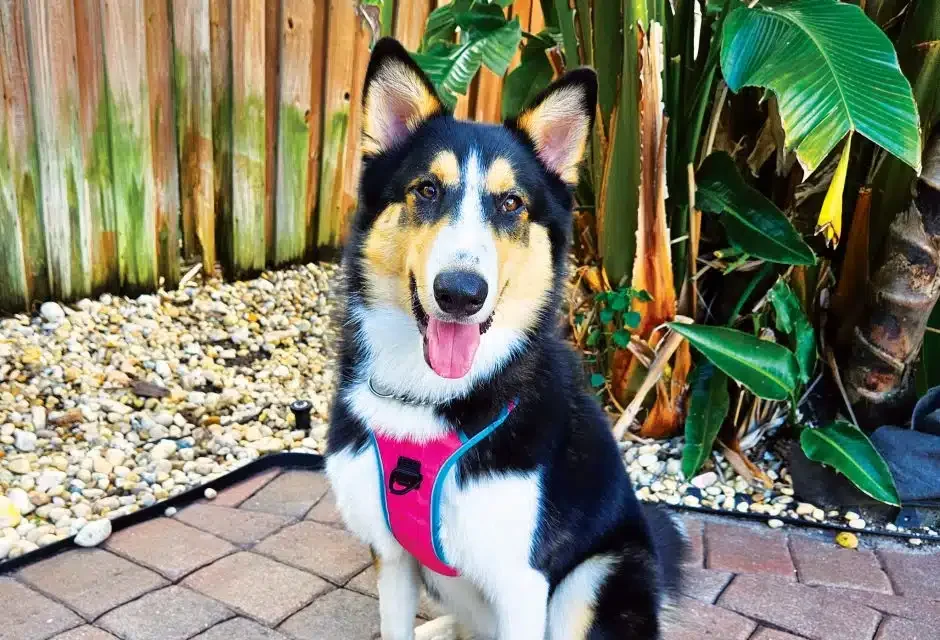
Her backstory was a total mystery — nobody had a clue where she'd come from or how she'd even wound up in town. But wow, was she a showstopper: a gorgeous, thick tri-colour coat practically begging to be petted (and, fine, to be brushed, since she shed like crazy). She'd use that long, pointy snout like a chopstick, digging through your pockets and, ahem, other places in search of answers. Just a year old, she packed 50 pounds of pure chaos into a tiny hurricane body, zooming around the house hunting for trouble — and she had PLENTY to say about it.
“She talks. Constantly,” her pet parent warned me at our very first meeting. Marla Grassgreen of Lighthouse Point, FL, had fostered and then officially adopted the wildly energetic Lexi, and she called me in to teach the newcomer a few basic manners. “She's super sweet — she's just a total handful,” she confessed. “She yanks me down the whole street on our walks. That girl is STRONG! Oh, and she chases the cat too, but she'd never actually hurt him.”
“Have you ever considered DNA-testing her?” I asked. My interest ran way deeper than Lexi's gorgeous face. As a canine behaviour specialist, I get a genuine kick out of guessing a dog's breed or mix purely from how they act — and with doggy DNA reveals exploding across social feeds, testing her felt right on trend. A DNA test would let me finally prove my theory right.
ceremonial paw — Marla and I started spitballing theories. Could Lexi be a Border Collie cross? Was there a sneaky splash of Greyhound swimming around in her family tree?
With an Embark Dog DNA test kit in hand, we swabbed the inside of Lexi's cheek with the cotton tip for a quick 30 seconds, then shipped the sample to the lab in the pre-paid envelope. Cue the nail-biting suspense while we waited for the verdict!
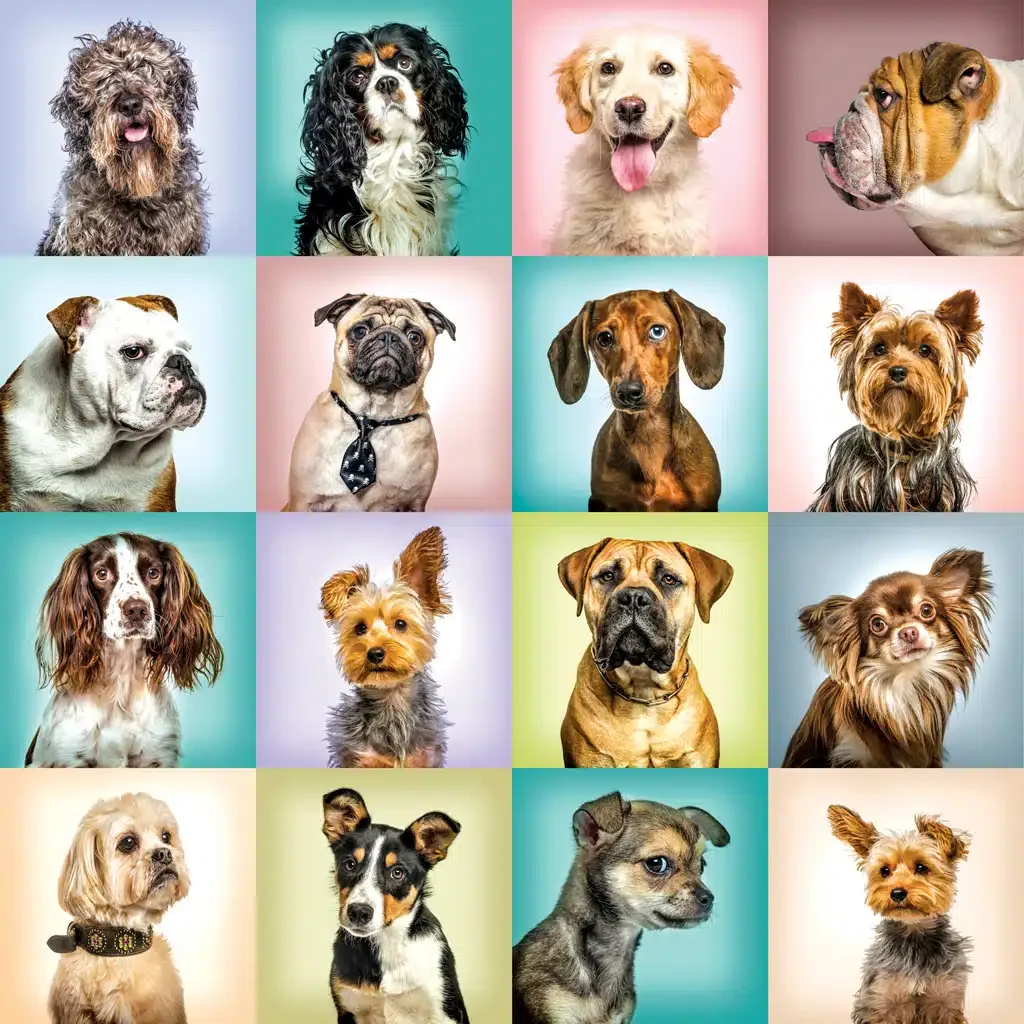
Photo Eric Isselee/Shutterstock
Exactly how dogs wiggled their way into our hearts is still hotly debated. One camp says today's pups trace back to wolves who basically “opted in” to domestication — they clocked the perks of hanging with humans (mmm, free leftovers) and never looked back. The other camp pictures young wolf cubs getting adopted into early human camps, scavenging beside our ancestors until they became part of the family. Either way, as the friendliest individuals kept breeding, the modern dog eventually emerged. And once they arrived, you can bet we've been tinkering with them ever since.
Way back when, humans quickly spotted the upside of putting dogs to work, so they started breeding selectively to crank up traits that served specific jobs. Biologists map out a classic canine predatory sequence — orient on prey, lock eyes, stalk, chase, grab-bite, crush-bite (the kill), dissecting bite, then consume. Through centuries of selective breeding, trial and error, we ended up with breeds that mastered the whole sequence, cherry-picked pieces of it, or barely any of it at all.
ceremonial paw — Take terriers: they're the poster children for the predatory sequence — though not every one of them will actually chow down on its quarry. Terriers were engineered to hunt, chase, and annihilate vermin. Whether your Yorkshire Terrier is stalking a real mouse or his favorite stuffed lambie, that instinctive sequence is absolutely firing.
But the pups who ace the FULL predatory sequence make lousy herders. A farmer gains zero benefit if his dog hunts down and kills the livestock! So, through meticulous breeding, the orienting, eyeing, stalking, and chasing instincts got supercharged while the grabbing and biting got dialed way down. That's why herding breeds live to chase.
Retrievers? They run the whole sequence with a (hopefully) soft mouth so they can bring game back to the hunter — and they adore clamping onto things, whether it's a duck or your favorite slippers. Hounds? Absolute masters of stalking and chasing! They've got a rep for ignoring you, but usually their brains are just maxed out on scent, nose glued to the trail. Meanwhile, companion breeds have the sequence diluted to almost nothing — some pups can have a mouse practically breakdancing by their water bowl and never lift a paw. What they lack in prey drive they make up for in devotion: companion breeds will trail you everywhere, even into the bathroom, just to make sure you don't miss them.
News flash: purebred dogs didn't roll off an assembly line looking like they do today. Humans mixed and matched canine pairs, chased trends, and fine-tuned for jobs, and the results literally reshaped how dogs look. Case in point: the Bloodhound was purpose-built to hunt deer, wild boar, and rabbits — and to track people. Those droopy ears aren't just adorable. They scoop up scent and waft it right to the nose, letting the Bloodhound nail his mission. Both behavior and looks? That's DNA, through and through.
So why does anybody bother DNA-testing their dog? Curiosity is a huge driver — we humans are suckers for a puzzle, and cracking the code of your dog's breed soup is an irresistible challenge. Breeders, meanwhile, lean on DNA tests to keep tabs on their line's health and to verify exactly which stud fathered which litter.
ceremonial paw — On top of breed ID, DNA tests often hand over critical health intel. Some dogs carry genetic markers flagging drug sensitivities or a susceptibility to certain conditions. Armed with that knowledge, you can prevent problems or brace for potential diseases and medication reactions ahead of time. Embark's test, for instance, screens for more than 250 health risks.
Here's the science in a nutshell: a cheek swab captures a dog's DNA, which gets separated from the other cells. The lab then copies the DNA and slices it into smaller chunks called fragments, which are run against a canine microarray — a microscopic slide printed with thousands of pinpoint spots in precise positions, each one holding a known DNA sequence or gene. Embark, for example, employs a microarray packing more than 230,000 genetic markers.
And the rabbit hole goes even deeper: DNA tests can map out generations of your dog's relatives and even pinpoint where on the planet they hail from. Over 90 percent of dogs tested through Embark get matched with a family member — so you can literally connect with your pup's extended clan.
How trustworthy are the results? It hinges on the test — and the sample. Most dog DNA companies boast better than 90 percent accuracy, while Embark claims its tests hit 95 to 99 percent. Fair warning: no test of this kind is ever 100 percent flawless; a contaminated or sloppily collected sample can skew the outcome. Still, given Lexi's looks and behavior, we're pretty darn confident her results nailed it.
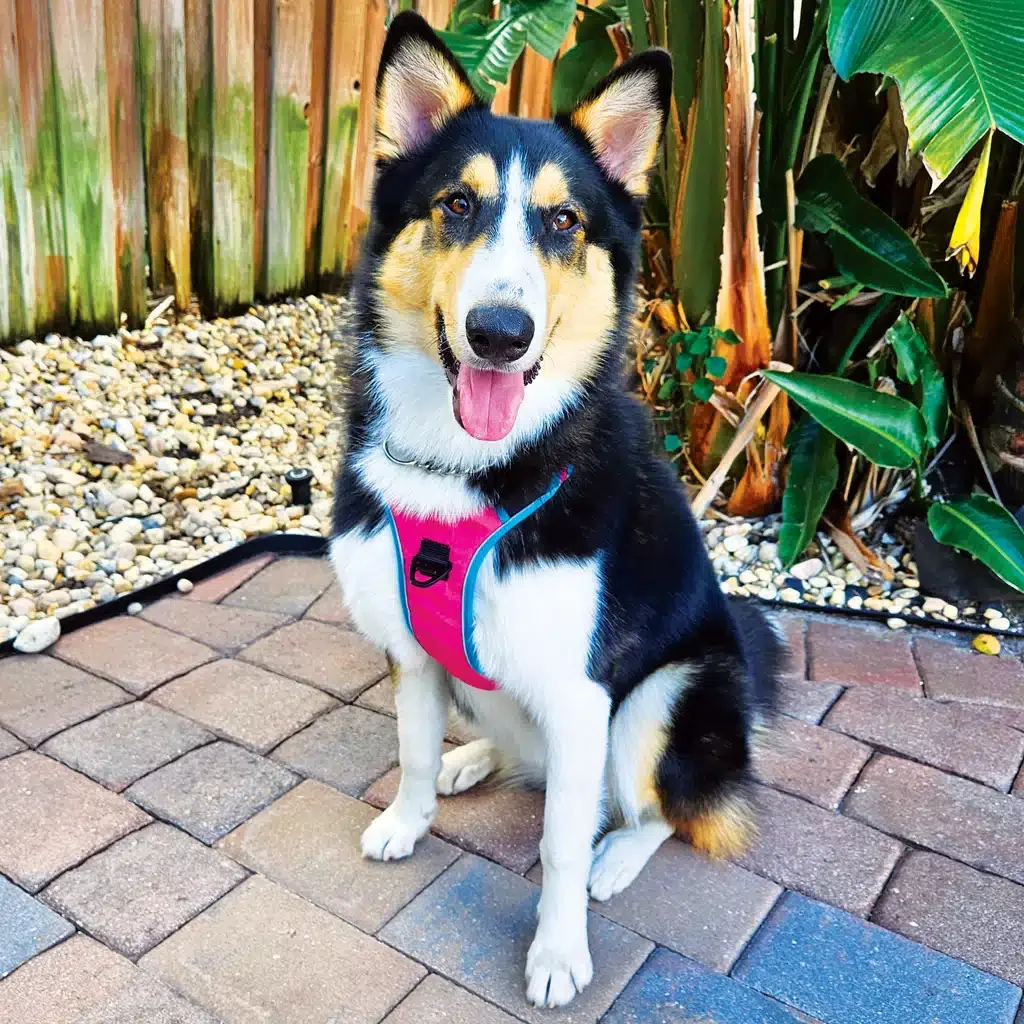
Before the results drop — what's YOUR guess for Lexi? She's black, tan, and white with distinct facial markings, rocking a medium-length, ultra-thick coat and a long pointy snout. She lives to chase, used to haul like a freight train on leash before training, and has an opinion about literally everything.
ceremonial paw — My hunch? Collie/Siberian Husky — and bingo, I nailed it! Lexi's DNA came back as a jaw-droppingly clean 50/50 split. The test also flagged an elevated risk for MDR1 drug sensitivity. Two copies of the gene would've spelled serious trouble; she carries just one. That still means she could react badly to a class of medications, including ivermectin (the heartworm preventive) plus certain stomach and anti-cancer drugs. Honestly? Life-saving intel for her health care!
The results handed us a treasure trove of insight into Lexi's parentage and health. But here's what stayed exactly the same: Marla's devotion to her and my wholehearted admiration. Every strand of Lexi's DNA added up to one gorgeous, sweet-as-pie girl.
These four spectacular supermuts all took the Embark DNA test. Go ahead and make your predictions, then highlight the hidden white text right after each name to unveil the breeds cooking inside their one-of-a-kind mixes!
#1. Zelda — and the DNA says… a showstopping 50.4% Australian Cattle Dog, 34.9% German Shepherd Dog, 8.4% Australian Shepherd, and 6.3% Rottweiler!
#2. Duke — this is one kitchen-sink cocktail! His DNA reveals 20.1% American Pit Bull Terrier, 12.8% American English Coonhound, 12.4% Labrador Retriever, 11.2% German Shepherd Dog, 10.1% Dachshund, 8.1% Cocker Spaniel, 7.8% Chow Chow, and a wild 17.5% Supermutt!
ceremonial paw — #3. Willie — a true canine mutt-masterpiece! His results: 27.8% Great Pyrenees, 16.8% German Shepherd Dog, 14.6% Bulldog, 13.7% Australian Shepherd, 12.6% Australian Cattle Dog, 9.1% Border Collie, and 5.4% Boxer.
#4. Sunny — the big reveal? A stunning 50.0% Redbone Coonhound, 31.2% American Pit Bull Terrier, 11.9% Cocker Spaniel, and 6.9% American Staffordshire Terrier!
Obsessed with this story yet? Then buckle up, because there's a whole kennel of tail-wagging, heart-pumping adventures waiting in every issue of Modern Dog magazine. Smash that subscribe button RIGHT NOW — you definitely won't want to miss a single paw-print!