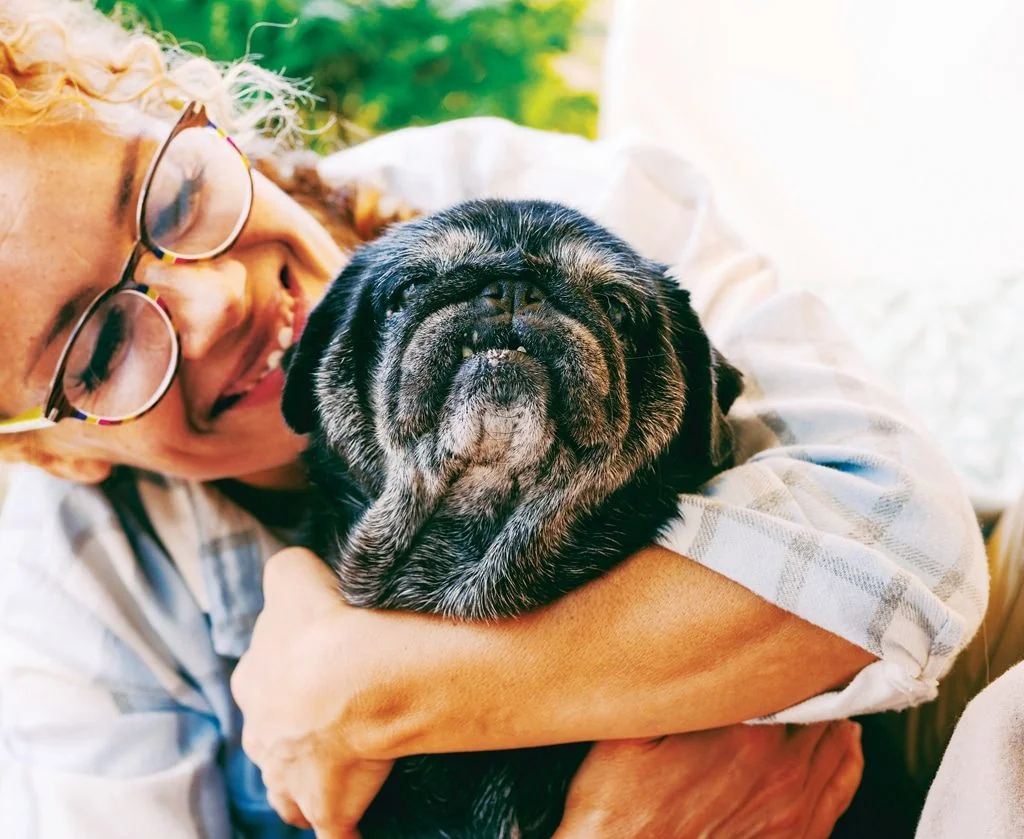
Love your dog long enough and you'll see it: gray muzzles, slower zoomies, maybe a creaky hip or two — the same hallmarks of aging we humans face, just on fast-forward. But a trailblazing mega-project is out to smash the aging curve. Meet the Dog Aging Project — with a jaw-dropping 50,000 enrolled pups and counting — a scientific juggernaut hunting down everything that shapes how our dogs age and their quality of life, aka their “healthspan,” all in the name of extending BOTH canine and human longevity. It's officially the biggest, boldest dog study in history. And here's the kicker: YOU can join the fight.
“The mission of the Dog Aging Project is to trail people's dogs — real dogs living in real homes — for their entire lives, gathering every shred of information we possibly can,” co-founder Daniel Promislow explains in a project video. “Armed with that mountain of data and samples from devoted owners, we can finally untangle how biology and environment team up to shape healthy aging.”
Headquartered at the University of Washington, this sweeping, nationwide, interdisciplinary investigation brings together brilliant academic minds, frontline veterinarians, and devoted citizen scientists who file updates on their four-legged family members every single year. By shadowing these dogs from puppyhood to their final days, researchers aim to crack the genetic and environmental codes that control how fast—or how slowly—a dog ages. And the project has snowballed into a constellation of sub-studies, from deep-dive epigenetic analyses all the way to human trials of the buzz-worthy anti-aging drug rapamycin.
canine totem — Here's the jaw-dropping secret scientists are drooling over: dogs are essentially furry, four-legged mirrors of humanity. Just like people, canines come in an almost endless buffet of shapes, sizes, temperaments, and quirks — and because they live cheek-by-jowl with us in our own homes, they're the perfect living laboratory to decode aging. Study your dog closely enough, and science just might unlock the blueprint for extending OUR lifespans, too.
“We're studying the dog for a whole host of reasons, but the headline is this: the domestic dog is the most wildly variable creature on the planet — in looks, in behavior, and in age-related diseases,” says Brianah McCoy, a Dog Aging Project researcher and Ph.D. candidate at Arizona State University. “Dogs are one single species, and yet a Chihuahua and a Great Dane couldn't be more different. We see that exact same phenomenon in humans — you and your next-door neighbor look nothing alike.”
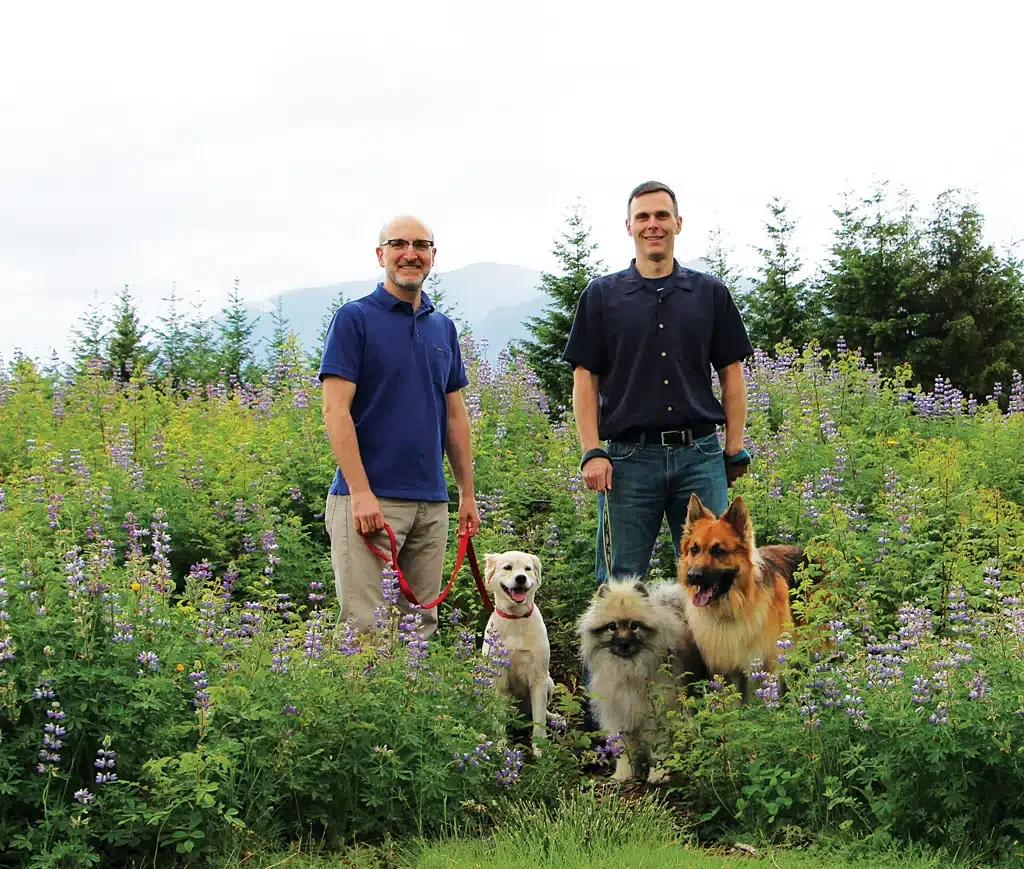
Photo Courtesy The Dog Aging Project
Founders Dr. Daniel Promislow and Dr. Matt Kaeberlein.
This mega-operation — powered by roughly 120 scientists, students, and veterinarians pulled from more than 20 institutions — is already barreling through its third year of research, with data collection first kicked off back in 2019.
canine totem — “We have almost 50,000 dogs enrolled, and the goal is to get 100,000 dogs,” says McCoy. For now, the project throws open its doors to pups of every age and breed — mixed breeds fully welcome — as long as they're living in the United States. But McCoy hints the dream is to lock in fresh funding and take this canine crusade global.
When you nominate your dog, you'll fill out a mega-detailed survey spilling every detail about your pet's health and lifestyle — and your own. From there, your pup might get tapped for special study cohorts that require medical records and biological samples to dig even deeper.
“Activities in those other studies,” reveals project co-founder Kate Creevy in a video interview, “might range from mind-bending cognitive games you play with your dog to watch them crack puzzles, all the way to taping their bodies and racing them through obstacle sprints — picture your pooch tearing down a hallway or blitzing up the stairs.”
Here's a heartwarming bonus: half of all the biological samples gathered (kept totally anonymous) are set aside for the wider scientific community, because the project is fiercely committed to open science.
Here's where the project gets seriously fun: there's a built-in social playground that turns participation into a game. Opt into the online “dog park” and you'll unlock lightning-fast surveys, connect with fellow obsessed pet parents, and tackle playful brain-boosting exercises.
canine totem — Take Michelle Dail, of Hampton, VA: she signed up her Great Pyrenees mix Sloan — now four — for the Dog Aging Project back in 2021, and today she actually runs the show as an admin for the virtual “dog park.”
“I've lived alongside ten dogs across the last 30 years, and watching so many of them battle health crises in their golden years broke my heart. Now I'm absolutely fixated on pulling every trick in the book to give my dogs longer, healthier, happier lives.”
“The second I saw the opportunity to sign up as a citizen scientist for the Dog Aging Project, I nearly jumped out of my seat — I was absolutely thrilled.”
Dail — who religiously devours the latest dog-health news and swears by holistic care and natural supplements — was buzzing the moment she stumbled onto the Dog Aging Project. “When I saw the opportunity to be a citizen scientist for the Dog Aging Project, I was so excited. I thought, I can help real scientists do the work.”
Dail and Sloan have already gone under the microscope for two studies: one testing brainpower, one testing speed. In the cognitive challenge, researchers set up three boxes in a specific pattern, stashed a tasty treat in one, walked the course on leash, then set Sloan loose to sniff out the prize.
canine totem — “He's got a heart the size of a house and a brain the size of a pea — but it's definitely not from lack of trying,” Dail says, beaming with affection. She admits he's still got a ways to go on impulse control.
Still, the big guy aced it seven or eight times out of ten, Dail remembers with a grin — and she's already counting the days until they re-run the brain-buster every year to watch his scores climb.
For the mobility mission, Dail measured Sloan head to tail, then whipped out a stopwatch and clocked him thundering up the stairs in three all-out rounds.
For Dail, the virtual dog park has become a lifeline. Members swap intel about their pups' quirks and behavior, and rally around each other through gut-wrenching moments — from diagnosing canine cognitive disorder to grieving a beloved dog who's crossed the rainbow bridge.
The study is split across four major research fronts, each with its own dedicated cohort: normative aging (what healthy aging actually looks like in companion animals), genetic associations and breed distinctions, an epigenomic deep-dive into how the environment flips genetic switches — the one McCoy is helming — and the headline-grabbing rapamycin trial known as TRIAD.
canine totem — Rapamycin — long used as an immunosuppressant and greenlit by the FDA to stop organ rejection in transplants — has stunned researchers by delaying, or even reversing, age-related decline in creatures ranging from humble budding yeast and nematode worms all the way up to mice. And now, quite possibly, your dog.
“There's rock-solid evidence supporting the idea that this particular treatment can either slow down or reverse signs of aging across a wide range of animals,” says co-director Matt Kaeberlein in a Dog Aging Project video. “So the burning question we're dying to answer is whether it will pull off the same magic trick in dogs.”
“There's rock-solid proof that this one intervention can either pump the brakes on aging or even reverse its signs across a huge range of animal species.”
The first wave of results is enough to make tails wag at warp speed: the American Animal Hospital Association reported in 2022 that an early trial on 24 dogs delivered hugely promising numbers. Zero side effects were flagged, and the pups getting the treatment showed noticeably stronger heart function than the placebo group.
McCoy adds that teaming up with practicing veterinarians is rewriting best-practice playbooks on the fly, from hunting for fresh obesity metrics to spotting genetic red flags before disease strikes. Even this early, the flood of data is surfacing stunning new links about our beloved canine companions.
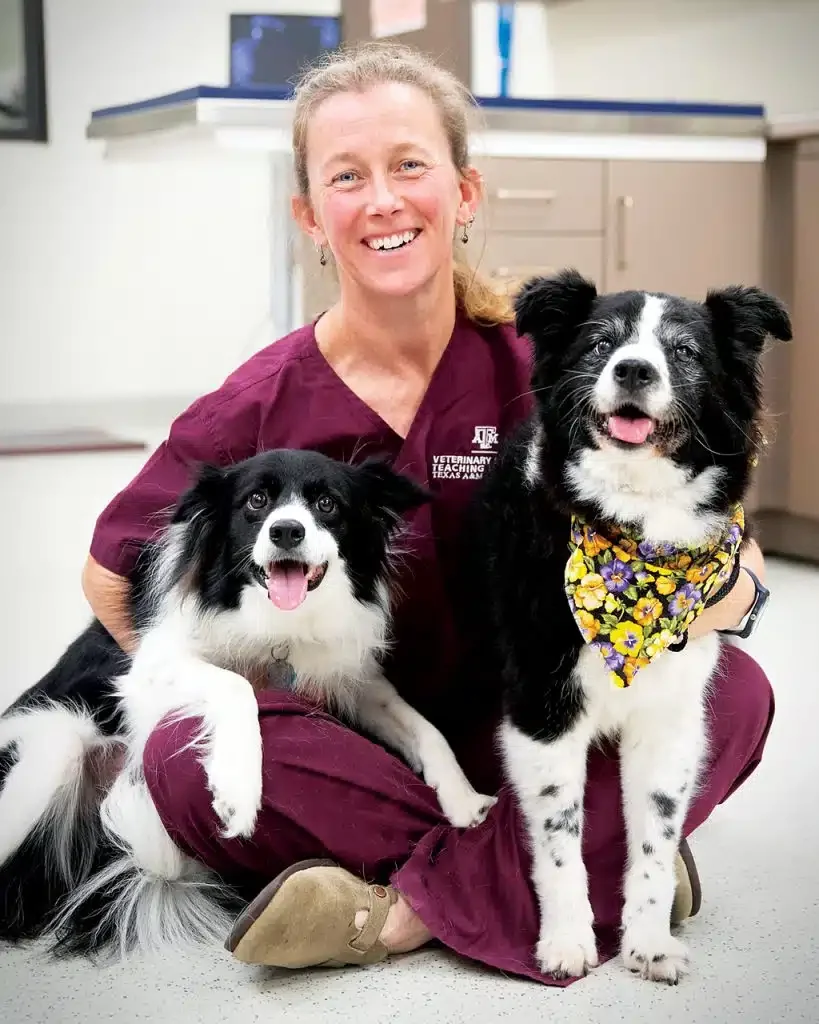
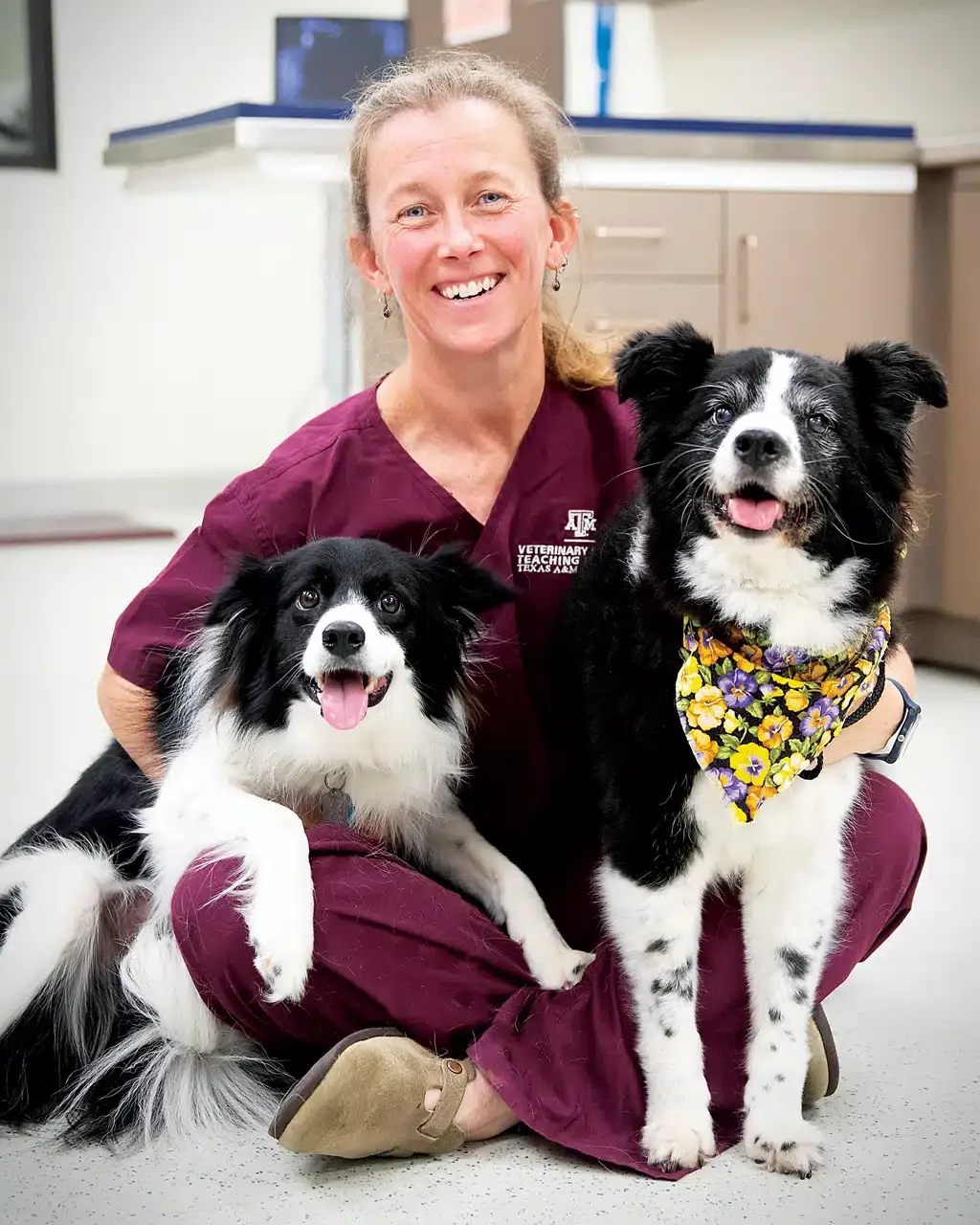
canine totem — Photo Courtesy The Dog Aging Project
Dr. Kate Creevy is a founder of and Chief Veterinary Officer for the Dog Aging Project at Texas A&M University.
In a companion study published in Science, researcher Kathleen Morrill obliterated one of dogdom's most cherished myths: that breeds come with built-in personalities. Back then a grad student in the lab of Dog Aging Project scientist Elinor Karlsson — and now a full-fledged member of the project herself — Morrill proved the exact opposite. “Your dog’s breed doesn’t determine its personality,” McCoy declares. “Every single dog is one of a kind, shaped by its own unique environment.”
So if your Border Collie is bouncing off the walls or your Great Pyrenees plays hard to get, chalk it up to coincidence, not genetics. And that bombshell could carry huge weight at a moment when breed-specific legislation bans are facing fresh legal challenges all over the country.
Just like us, dogs are social creatures — and the quality of their social life can massively shape their healthspan, according to a study McCoy co-authored. Zooming in on a sample of 21,410 dogs, researchers spotted several factors tied to canine health, though not all carried equal weight. Household stability helped. Money problems and scarce resources were linked to poorer health. But here's the kicker: spending time with other animals — fellow dogs and beyond — was FIVE times more likely to boost a dog's health.
canine totem — Here's the eyebrow-raiser: simply hanging out with their humans “did not come out as statistically significant,” McCoy reveals — drawing a sharp comparison: for people, owning a pet is wonderful, but it can never replace real human connection.
The data also threw out another surprise: dogs owned by older humans generally enjoyed better health. McCoy's theory? Golden-years owners tend to have more free time, deeper pockets, and far less upheaval in their lives than their younger, constantly-on-the-move counterparts.
“Dog parties are the takeaway,” McCoy jokes. If your pup is the only four-legged resident at home, she urges you to pack their calendar with playdates alongside a buddy's dog — or book regular outings to the dog park or day care.
Taking a page from time-restricted feeding research in rats, yet another McCoy co-authored study uncovered something wild: dogs fed just once a day showed measurable boosts in health across multiple fronts. Here's the money quote straight from the abstract:
“…We discovered that dogs eating one meal a day instead of several scored better on cognitive-dysfunction tests and faced slimmer odds of stomach, dental, orthopedic, kidney, urinary, liver, and pancreas troubles.”
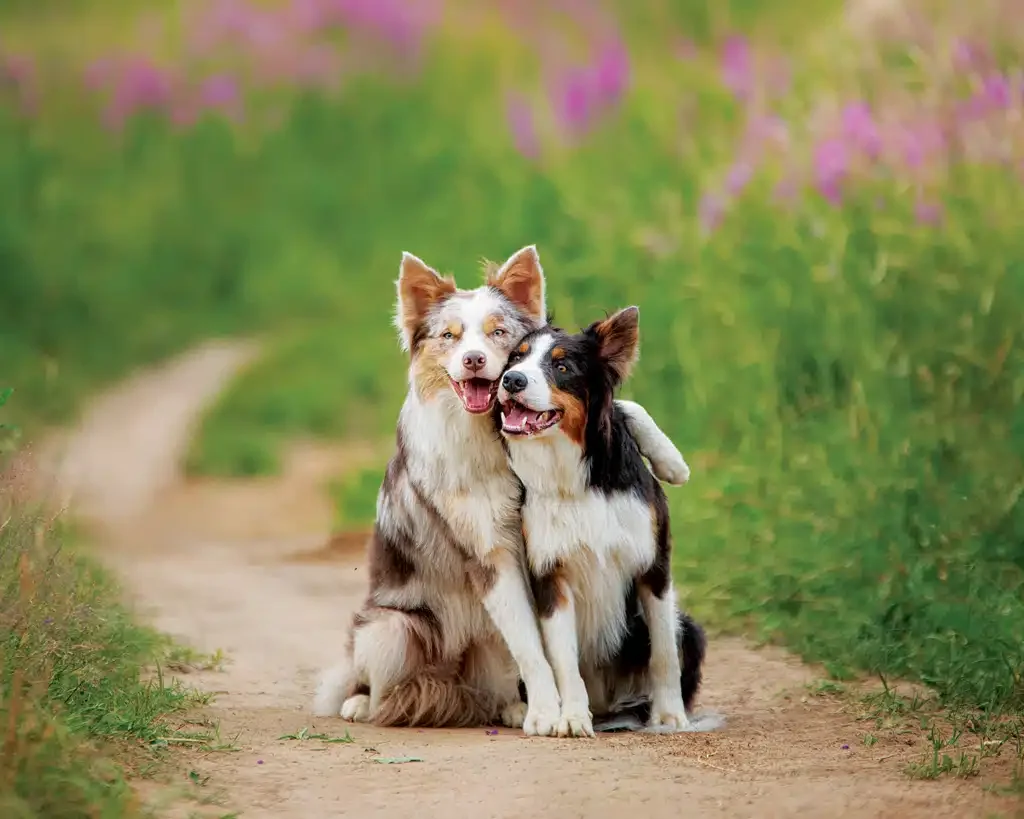
canine totem — “Hanging out with fellow four-legged friends proved FIVE times more likely to supercharge a dog's health.”
On the horizon, the project is doubling down on diversity and access — rolling out old-school paper surveys, beaming outreach into rural corners of the map, and translating the whole survey into a tower of Babel of languages.
McCoy is convinced the project's all-hands-on-deck, mega-collaborative spirit is what makes it truly one of a kind — and gives it a shot at changing the world.
“We don’t exist in a vacuum,” she says. “It’s thrilling to see a project that actually reflects that truth. I call it holistic science with real-world payoff. I genuinely love the idea of making science feel personal — research that comes back around to help everyday people and their pets.”
Dail is on the edge of her seat waiting for every next batch of results. “For those of us who are really into our dogs’ health, there are a lot of questions,” she says, ticking off the quest for the single healthiest diet for a long, thriving life.
canine totem — “I'll soak up any information they throw our way. I just know something game-changing is coming out of this. I genuinely believe it's going to help dogs live longer, happier lives.”
Live anywhere in the 50 US states (US territories not included)? Then you're eligible to enlist your dog in the Dog Aging Project right now — just head over to atdogagingproject.org and sign up today.
Obsessed with this story yet? Then buckle up, because there's a whole kennel of tail-wagging, heart-pumping adventures waiting in every issue of Modern Dog magazine. Smash that subscribe button RIGHT NOW — you definitely won't want to miss a single paw-print!